
One specialized retailer now shows up in ChatGPT shopping results 93.7% of the time. Most enterprises with bigger budgets and broader catalogs don't show up at all.
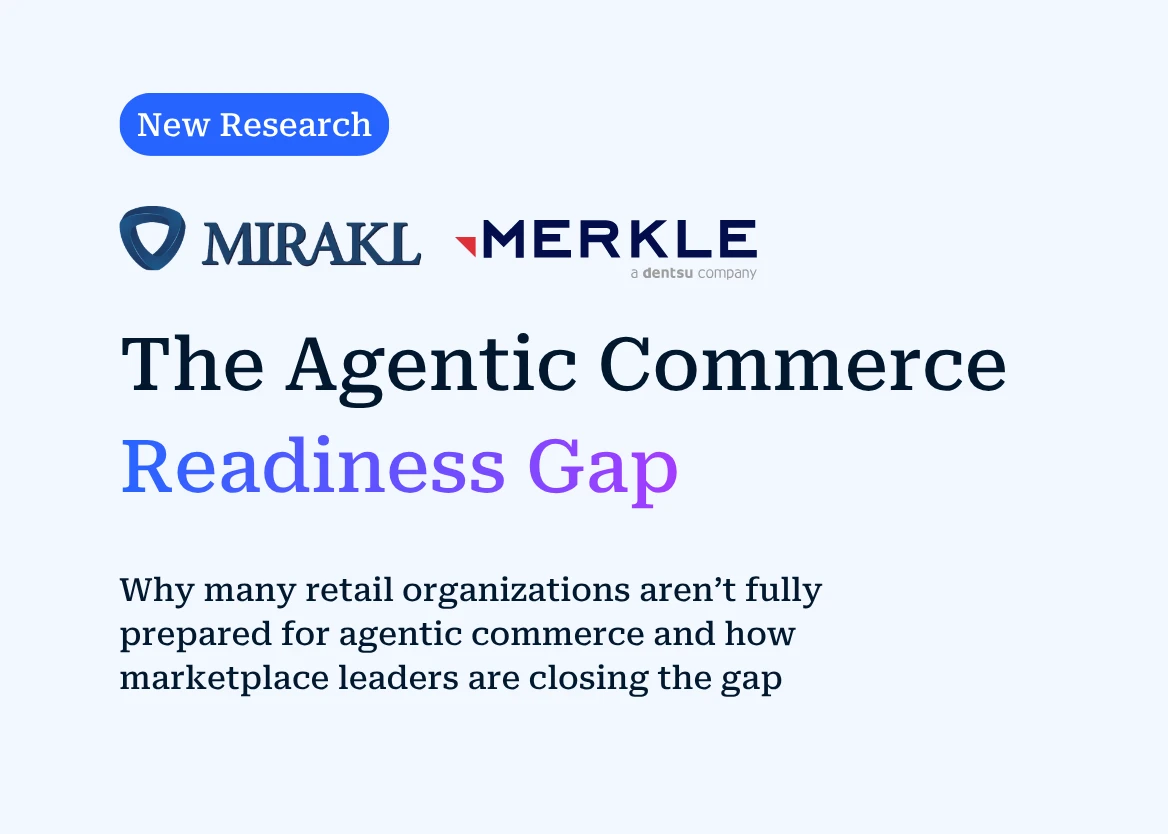
That gap — between the retailers AI agents recommend and the ones AI agents skip — is the subject of new research from Mirakl and Merkle.
We surveyed senior executives at large organizations to understand where enterprises actually stand on agentic readiness, what's separating the leaders from everyone else and what it takes to close the distance before the window narrows further.
The short version: Agentic commerce readiness isn't about spend, and it isn't about ambition and architecture.
The full report, The Agentic Commerce Readiness Gap, includes the complete findings, a diagnostic to benchmark your own readiness, and a three-step roadmap for closing the gap.
Below are some highlights from the findings.
The tension at the heart of agentic commerce
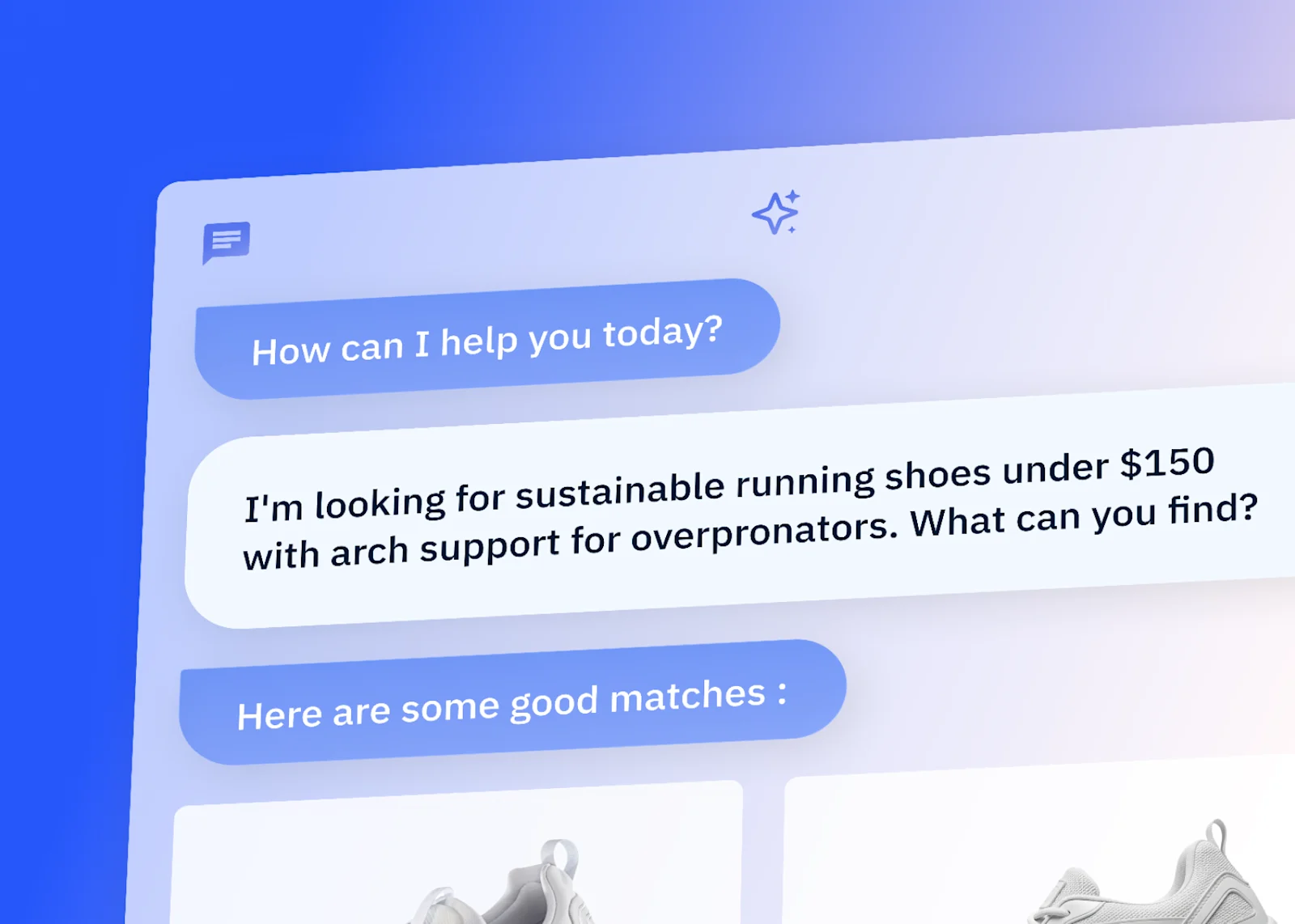
Agentic commerce describes a shift in how buying decisions get made. Rather than a consumer browsing a website or typing a query into a search bar, an AI agent acts on their behalf — gathering options, comparing products across retailers and, increasingly, completing the transaction directly within the conversation.
For consumers, this is a feature. They want it. They trust it. They're using it today.
For enterprises, it exposes a problem years in the making.
That’s because AI agents don't forgive incomplete product data, limited assortment or slow inventory updates. They don't navigate around friction the way a determined human shopper might. They evaluate options in milliseconds and surface the best results.
If your catalog isn't ready to be read, interpreted and acted on by AI systems, you simply won't appear.
Most enterprises aren't ready for agentic commerce, and the data shows it
The research behind this report pulls from a Merkle study of senior executives across large organizations. What it reveals is a pattern that will feel familiar to many: AI investments are underway, but the foundational work to make them pay off hasn't kept pace.
Only a fraction of enterprises have fully realized ROI on their technology investments. The majority point to competing transformation priorities, fragmented internal processes and insufficient training as the barriers holding them back. Nearly all respondents report gaps in the organizational readiness required to scale AI effectively.
The challenge isn't ambition — it's infrastructure. And in an agentic world, infrastructure is everything.
The four things LLMs and AI shopping agents reward
Based on Mirakl's market analysis and Merkle's research, four pillars consistently separate retailers that perform well in AI-driven discovery from those that don't:
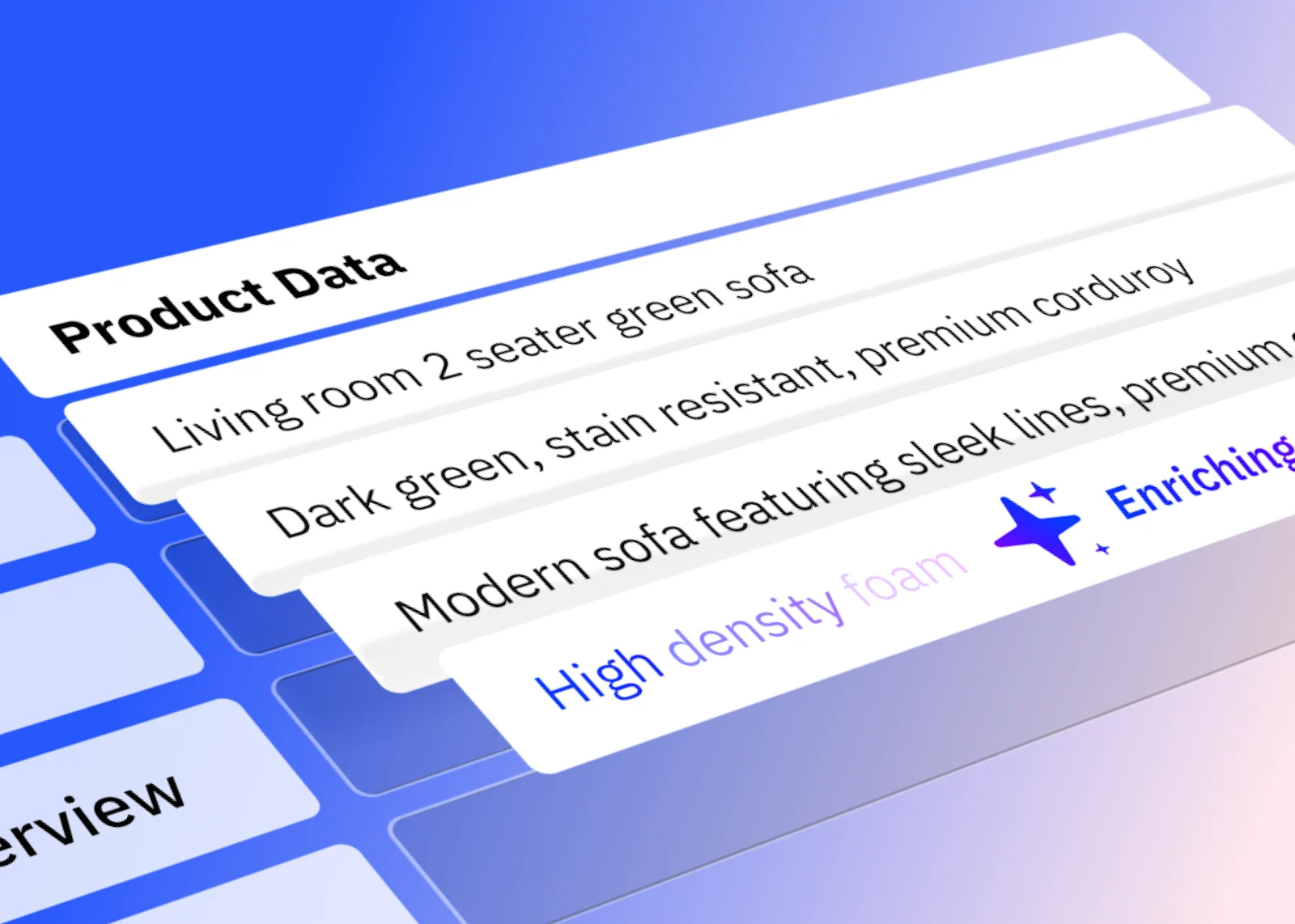
1. Clean, real-time product data. In agentic commerce, your product feed is your storefront. If it's incomplete, outdated or inconsistently formatted, AI systems can't recommend you accurately — or at all.
2. Context-rich descriptions. AI agents don't just match keywords. They interpret intent. Research shows that descriptions optimized for context meaningfully increase the likelihood that an AI system will select a product. Generic specs aren't enough anymore.
3. Broad, basket-completing assortment. Consumers are asking AI for full solutions, not single products. Retailers that can fulfill the complete intent behind a query — across categories and price points — have a structural advantage in how AI agents rank and recommend them.
4. Direct connection to LLMs. Leading AI platforms are becoming active shopping channels, not just research tools. Without a direct integration, brands risk being invisible at the exact moment a consumer is ready to buy.
Why marketplace leaders are pulling ahead in agentic commerce
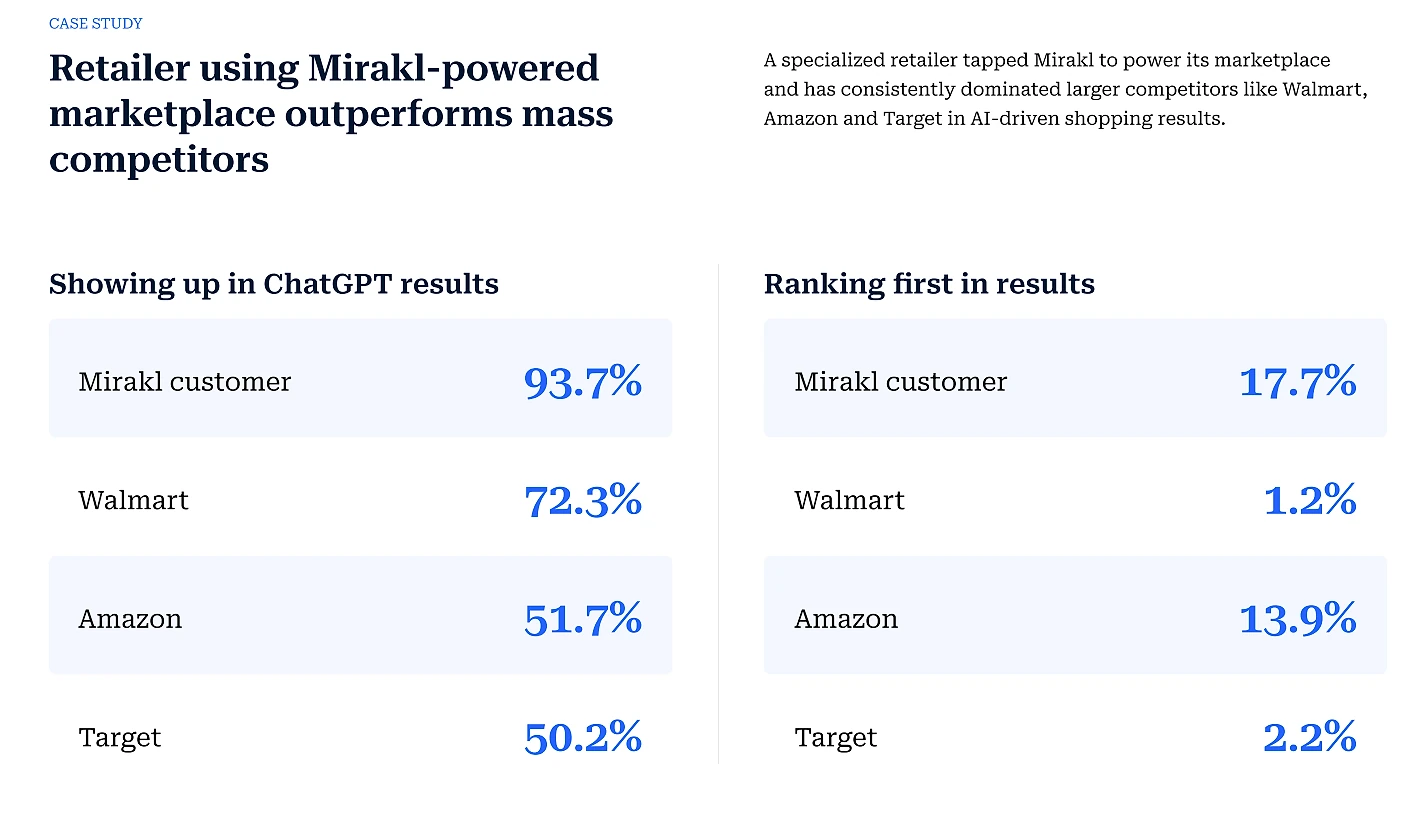
Here's where the data gets striking. While most of the market struggles with AI readiness, a distinct group of retailers is pulling decisively ahead: those operating marketplace models.
Mirakl-powered marketplaces grew gross merchandise value 31% year over year in 2025 — roughly 4.5 times the rate of traditional eCommerce. One Mirakl-powered specialized retailer now appears in ChatGPT shopping results 93.7% of the time, outperforming mass-market competitors that have invested far more in absolute technology spend.
The structural reason is straightforward. Marketplace models address both sides of the readiness challenge simultaneously. They expand product assortment without requiring retailers to take on inventory risk. They distribute the burden of catalog maintenance across sellers while enforcing data quality standards centrally. They enable the breadth, availability and data infrastructure that AI agents are built to reward.
The retailers closing the agentic commerce gap fastest aren't necessarily the ones with the largest budgets. They're the ones with the right architecture.
Time is running out to close the agentic commerce readiness gap
The good news from this research is that readiness is achievable. The organizations making real progress share a common approach: they're strengthening product data, expanding assortment, improving operational consistency and building internal capability — all at the same time, using scalable platform models rather than trying to build everything from scratch.
The harder truth is that AI agents don't wait. And, if you’re not ready, they’ll recommend someone else.
Understanding where your organization stands today is the first step. The full Mirakl x Merkle report — The Agentic Commerce Readiness Gap — includes the complete research findings, a diagnostic framework to assess your readiness, and a concrete three-step roadmap for closing the gap.