
For over two decades, the formula for digital growth was simple: dominate the search engine results page. If you ranked in the top three blue links on Google, you captured the majority of organic traffic.
But that era is ending. Between Nov. 2024 and Nov. 2025, Google traffic from organic search to more than 2,500 sites was down by 33% globally and by 38% in the US (opens in a new tab). Meanwhile, AI referral traffic to eCommerce sites increased twelvefold in just seven months. As shoppers shift their behavior from typing keywords into a search bar to asking questions of AI platforms, that trend is only expected to accelerate.
Today, consumers are increasingly using Gemini, Copilot, Perplexity and ChatGPT to find products, compare options and make decisions — all without ever clicking a traditional link. Adobe research reports (opens in a new tab) that 72% of consumers who use AI for shopping now rely on it as their primary search tool.
This shift has created a new technical imperative for enterprise retailers and brands: Generative Engine Optimization, or GEO.
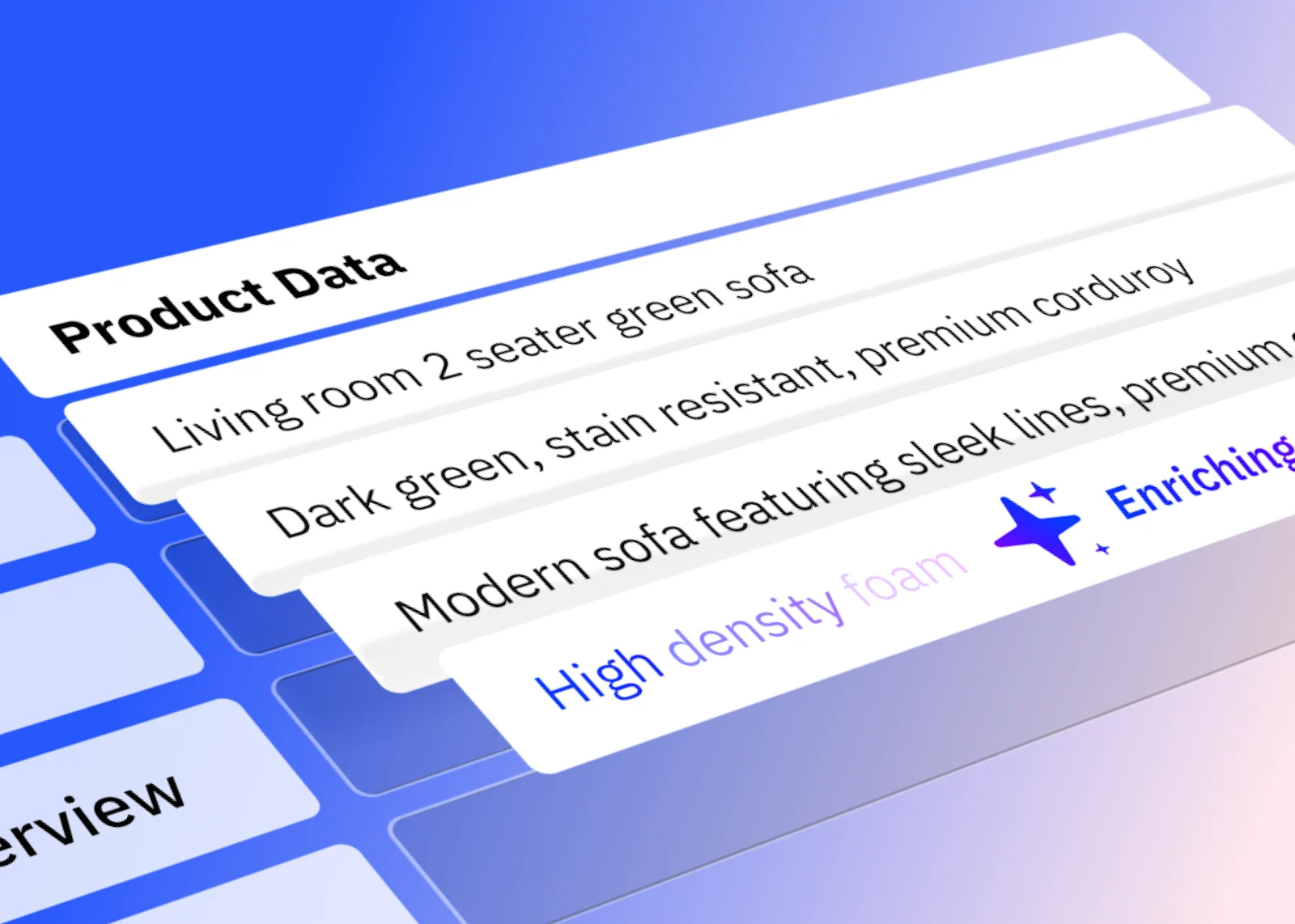
Generative Engine Optimization (GEO) is the strategic process of enriching and structuring commerce data so large language models (LLMs)—AI systems trained on vast datasets to understand and generate human-like text—can accurately discover, compare and recommend products.
Note: eCommerce GEO refers to Generative Engine Optimization, not geographic targeting or geolocation strategies. While geo-targeting focuses on delivering location-specific content to users, GEO focuses on making product data machine-readable for AI discovery platforms.
If your product catalog is not optimized for these platforms, your brand risks being filtered out by AI agents entirely—missing the fastest-growing segment of digital shoppers.
Why traditional SEO fails the enterprise ecosystem
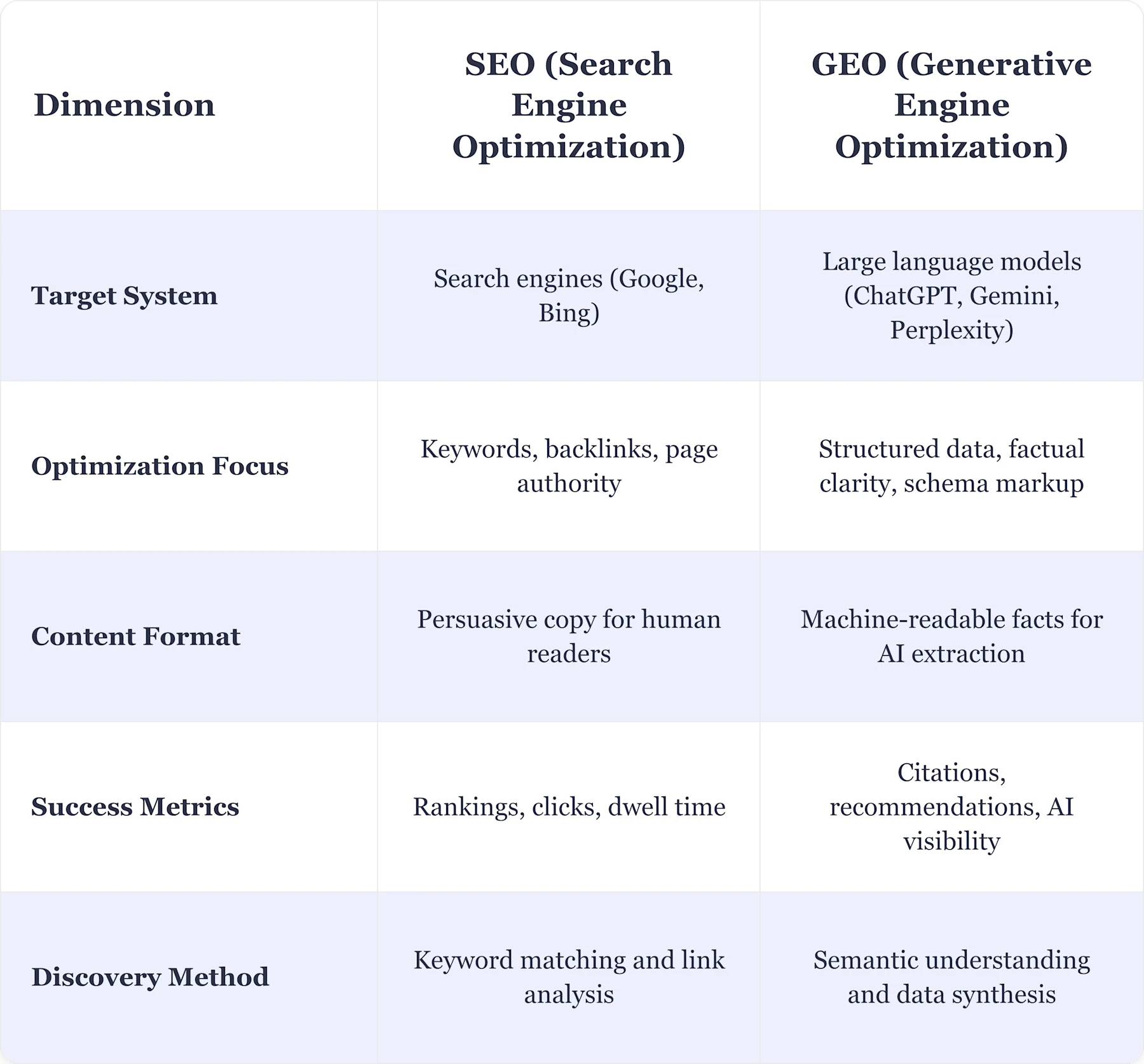
Traditional SEO was built for human-centric persuasion. It prioritizes keyword density, backlink profiles and dwell time. While these factors still matter for legacy search, LLMs operate on a different hierarchy of needs.
Generative engines prioritize "Machine-Readable Truth." In contrast to traditional, fragmented formats like HTML, PDFs or plain text, this approach prioritizes structured clarity. By eliminating unnecessary complexity, it ensures that models can interpret information accurately (opens in a new tab) without the confusion often caused by unstructured data.
For an enterprise managing millions of SKUs across a complex marketplace or dropship ecosystem, the "manual SEO" approach of the past cannot scale. You are no longer just optimizing a single storefront; you are orchestrating a data ecosystem that must be instantly legible to AI.
SEO vs GEO: Key differences
The 5 pillars of eCommerce GEO readiness
To understand how your products rank in an AI-driven world, you must look at the five critical areas generative engines use to grade and cite authority:
- Structured data and schema markup: Machine-readable metadata like JSON-LD that allows AI to verify price, availability and product identifiers with certainty. LLMs prioritize products with complete structured data. Implementing JSON-LD (JavaScript Object Notation for Linked Data) — a lightweight format for encoding structured data — for products and offers eliminates ambiguity. It allows an AI to verify price, availability and identifiers like GTIN (Global Trade Item Number) or MPN (Manufacturer Part Number) with absolute certainty. Products without structured schema markup are significantly less likely to be cited in AI-generated recommendations.
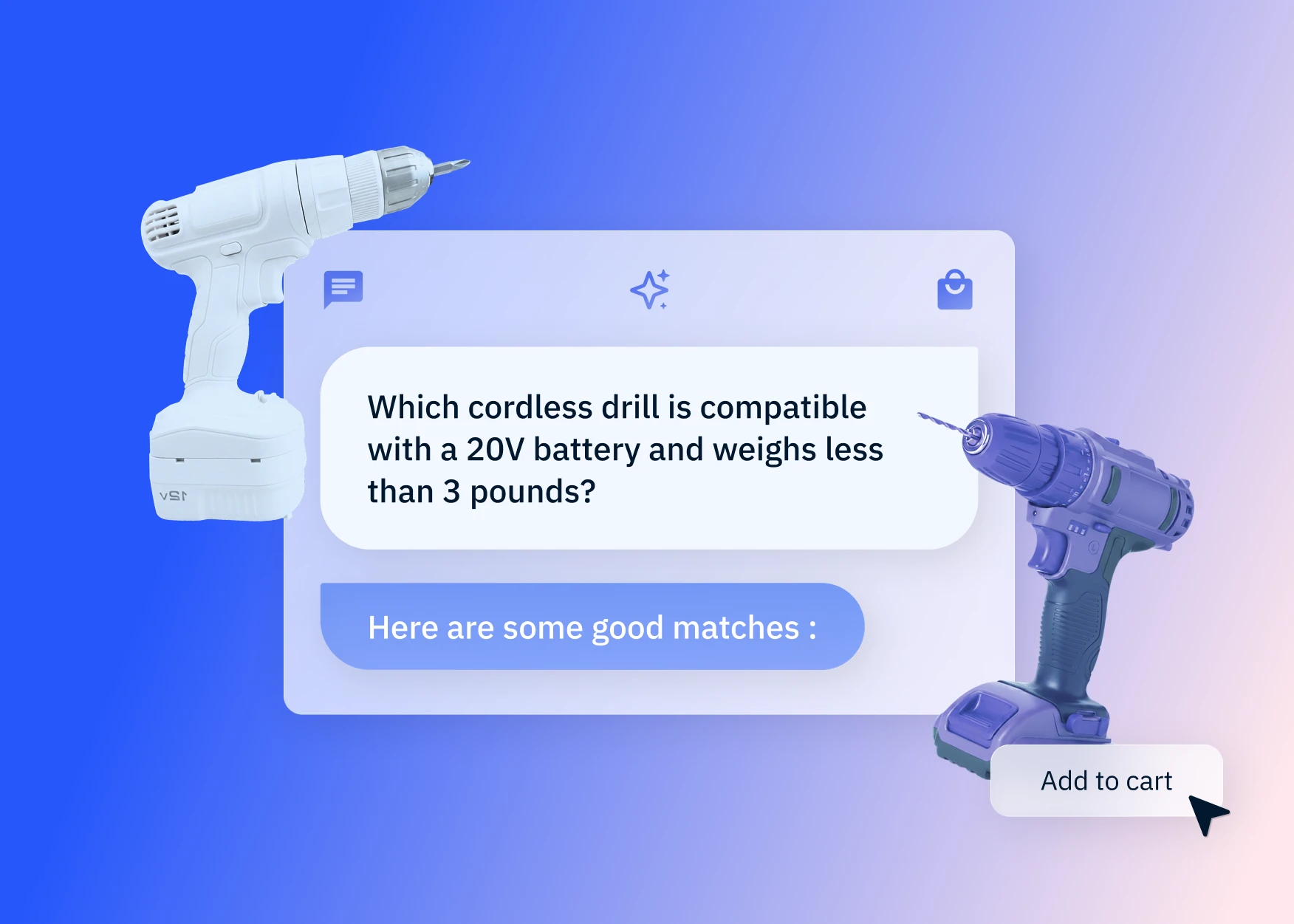
- Product attribute completeness: Granular specifications that enable AI agents to match products to specific shopper queries. AI agents generate responses by synthesizing factual details. If a shopper asks, "Which cordless drill is compatible with a 20V battery and weighs less than 3 pounds?" the AI will only recommend products with those specific attributes explicitly listed. Moving beyond basic titles to granular specifications is no longer optional.
- Content quality and factual clarity: Verifiable claims, bullet points and structured lists that AI systems can extract without interpretation. Generative engines favor "factual density" over marketing jargon. While humans might be swayed by flowery prose, an LLM looks for bullet points, tables and structured lists. Pages that prioritize verifiable claims are significantly more likely to be cited as authoritative sources in AI conversations.
- User-generated content and social proof: Structured review and rating markup that validates quality for AI evaluation. LLMs increasingly value diverse viewpoints and verified purchase signals. By using structured review and rating markup, you provide the "social proof" that AI agents use to validate quality and answer long-tail queries about real-world performance.
- Visual optimization and multimodal context: Detailed alt-text and image metadata that align visual content with textual search intent. As AI platforms evolve into multimodal tools (like Gemini's integration with Google Lens), visual assets become a bridge to discovery. Detailed alt-text and image metadata ensure that your visual content aligns with textual search intent, powering "Shop-by-Image" features.
GEO for B2B marketplaces
While GEO principles apply across all commerce, B2B marketplaces face a compounding challenge: AI agents must navigate buying environments that are fundamentally more complex than B2C. A single reorder transaction might require confirming part compatibility, applying negotiated contract pricing, routing to the correct fulfillment location and surfacing accurate delivery estimates — all autonomously.
With AI agents projected to intermediate 90% of B2B buying by 2028 (opens in a new tab), getting this right is urgent.
True B2B GEO readiness requires three things working in concert:
- Presence: Structured data and schema markup that makes your catalog discoverable to AI agents
- Access: APIs and direct feeds that allow agents to actually transact — checking inventory, building carts, placing orders
- Experience: Shaping where and how those transactions happen, from checkout within LLMs to autonomous reordering via shopping agents
Underpinning all three is clean, agent-readable product data. For B2B, that means going well beyond accurate SKUs to include compatibility details, volume pricing tiers, minimum order quantities, procurement workflow requirements and real-time inventory availability. Agents have no tolerance for ambiguity — missing attributes don't slow them down, they stop them.
For a deeper look at how to build your B2B agentic commerce readiness across each layer, read our full framework here.
Diagnostic: The Product GEO Readiness Analyzer
According to our research into eCommerce product pages, most enterprise product details pages (PDPs) currently score average or below on the GEO scale. To help brands understand where they stand, we have developed a diagnostic tool: the Product GEO Readiness Analyzer (opens in a new tab).
By submitting a URL, retailers can receive a "Citation Likelihood Score" based on the pillars mentioned above. An "Excellent" score (86-100) indicates your product is highly likely to be featured as a primary recommendation in AI chats, while lower scores represent a significant risk of being filtered out by AI agents entirely.
From discovery to transaction: Agentic Activation
Discovery is only half of the battle. In the next phase of commerce, the AI platform itself will become the checkout. Microsoft has already noted that shopping journeys with Copilot are 194% more likely to result in a purchase (opens in a new tab) when intent is present.
To capture this revenue, companies must move from a defensive posture to "Agentic Activation." This requires a two-pronged approach:
- Automated enrichment: Optimize and enrich product catalogs to make them discoverable and citable by LLMs, driving AI-traffic to your websites.
- Direct distribution: Direct integration with LLM platforms to enable in-chat transactions, with automated pricing, inventory and promotions sync.
Future-proofing your platform with Mirakl
As the market shifts toward intent-driven answers, the infrastructure behind your catalog matters more than ever. Mirakl is helping the world’s leading retailers and brands navigate this transition through Agentic Activation.
Our newest product, allows organizations to bridge the gap between fragmented data and AI-ready catalogs. By leveraging LLMs as a managed sales channel, Mirakl empowers retailers and brands to turn the "AI threat" into a scalable revenue driver, today.
Are your products invisible to AI? Use our Product GEO Readiness Analyzer (opens in a new tab) today to get your score and learn more about Agentic Activation, here.
Frequently asked questions
What is the difference between SEO and GEO?
SEO (Search Engine Optimization) optimizes content for traditional search engines like Google using keywords and backlinks. GEO (Generative Engine Optimization) optimizes product data for AI platforms like ChatGPT and Perplexity using structured data and factual clarity so LLMs can accurately cite and recommend products.
How does GEO apply to B2B marketplaces?
B2B GEO requires optimizing for complex buying workflows including multi-approver processes, quote management, bulk ordering and ERP integration. AI agents evaluating B2B products need structured access to negotiated pricing, volume discounts and procurement system compatibility.
What structured data does GEO require?
GEO requires JSON-LD schema markup for products, including price, availability, GTINs, MPNs, product attributes, reviews and ratings. Complete, machine-readable metadata allows AI systems to verify and cite product information with certainty.
How do AI shopping agents evaluate products?
AI agents synthesize structured product data, user reviews, factual specifications and social proof signals to generate recommendations. Products with complete attributes, verified claims and structured markup are prioritized in AI-generated responses.