
The AI commerce land grab is happening right now. And the data reveals a clear pattern: retailers with marketplace models are dominating AI-driven product discovery, while single-vendor sites are becoming invisible.
New research from Mirakl (opens in a new tab) analyzed 2,340 commonly searched keywords across ChatGPT (accessed November 2025), Google AI and Perplexity to understand which retailers win when AI agents recommend products. The findings are striking—and they reveal why marketplace infrastructure has become the critical competitive advantage in agentic commerce.
The 24% visibility gap
When consumers ask AI agents to find products, retailers with marketplace-enabled catalogs appear in results 24% more often than those relying solely on their own inventory.
But frequency isn't the whole story. Position matters even more.
In AI-driven shopping, there is no "page one" anymore. On the desktop, only the top three results are visible without scrolling. On mobile, it's just two results. If you're not in that initial view, you've lost the sale.
Marketplace-enabled retailers also capture the coveted first position more frequently than competitors—giving them a compounding advantage in visibility and conversion.
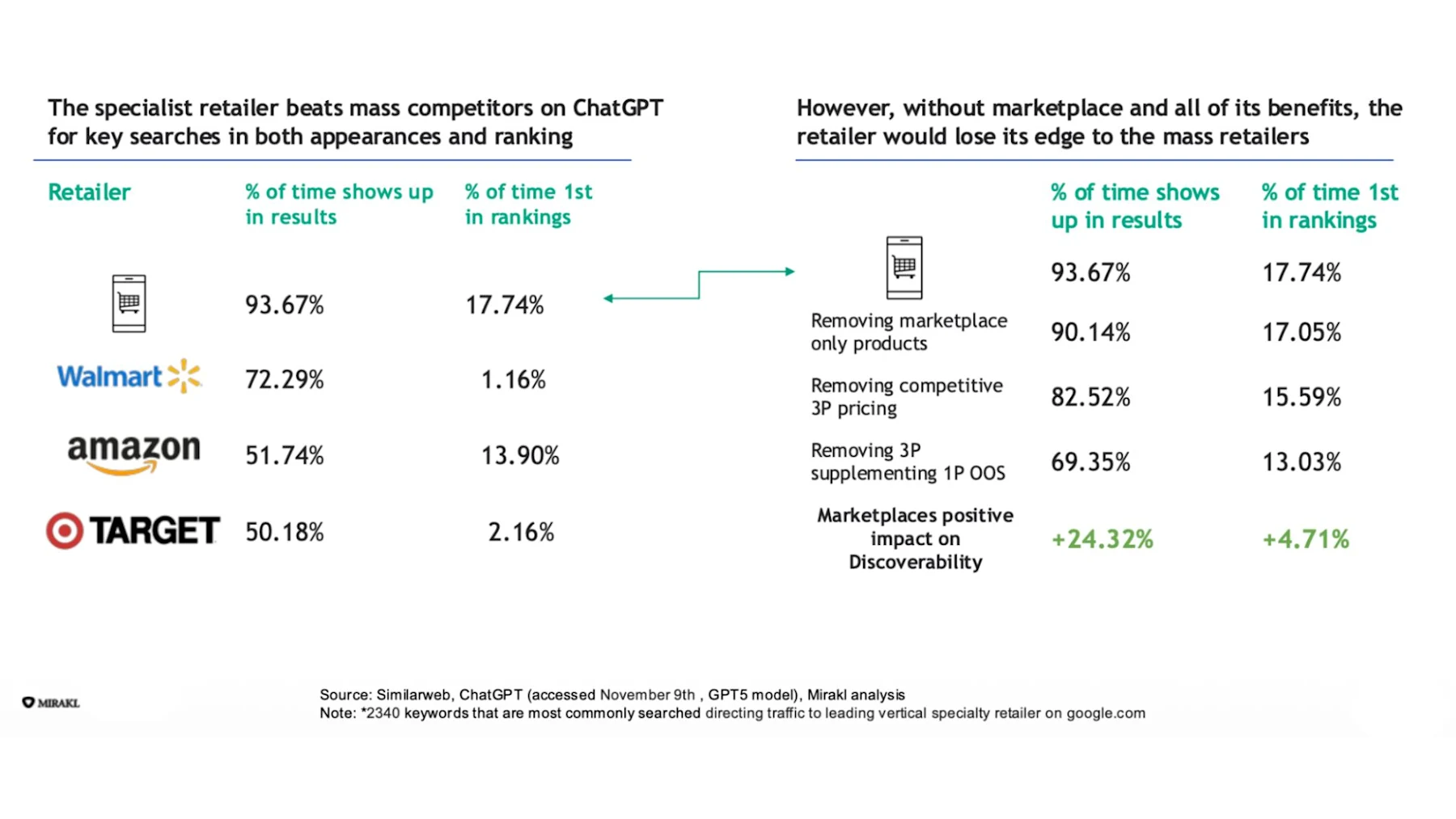
Translation: When a consumer asks ChatGPT for running shoes, retailers with marketplace models show up more often and rank higher. The compounding effect is devastating for competitors still operating on legacy, single-vendor infrastructure.
Why AI agents prefer marketplaces
The research identified three specific factors driving marketplace advantage in AI shopping:
1. Availability is non-negotiable
AI agents won't recommend out-of-stock products. Period.
When an agent scrapes a single-vendor site and finds a product unavailable, it moves to the next option. Marketplace models eliminate this problem by aggregating inventory from hundreds or thousands of third-party sellers.
The result? Marketplace retailers never show "out of stock" when AI agents come searching. They have the product, in the right size, in the right color, available for delivery when the customer needs it.
This isn't just about having more SKUs. It's about inventory resilience at scale—exactly what AI agents optimize for when making recommendations.
2. Competitive pricing happens automatically
AI agents compare prices across retailers instantly. They surface the best deal.
Here's the problem plaguing single-vendor sites: many aren't feeding accurate pricing data to AI platforms. Instead, ChatGPT and Perplexity scrape product pages—and they frequently get it wrong.
Testing revealed instances where AI platforms displayed prices 30% higher than actual site prices because scraped data missed promotions, loyalty discounts, multi-buy offers and cart-level pricing adjustments.
Marketplace models solve this in two ways:
- Real-time catalog feeds push accurate pricing directly to AI platforms (no scraping errors)
- Built-in seller competition ensures prices stay competitive without manual intervention
When AI agents evaluate which retailer to recommend, marketplace-enabled sites consistently show better, more accurate pricing.
3. Rich data at scale
This is where the advantage becomes structural.
AI agents don't match keywords like Google did. They understand intent and context. When a consumer asks, "I need running shoes for a marathon under $200 that won't hurt my knees," the AI isn't looking for "running shoes." It's looking for semantic concepts like "long-distance running," "impact cushioning" and "knee support."
Single-vendor sites typically have one product description per item—optimized for Google's keyword algorithm, not for AI's contextual understanding.
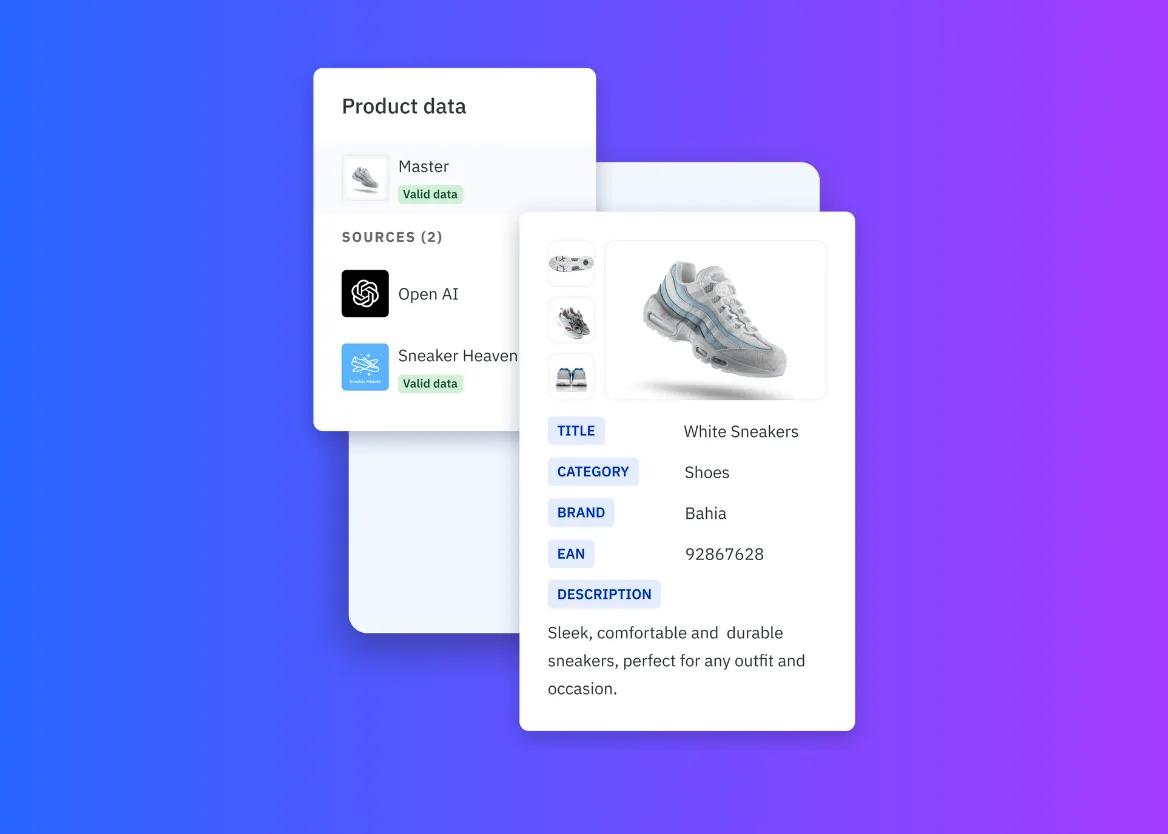
Marketplace platforms aggregate data from thousands of sellers. Each seller contributes product descriptions, images, attributes and metadata. This diversity creates exponentially richer, more contextually relevant data—exactly what AI agents need to match conversational queries.
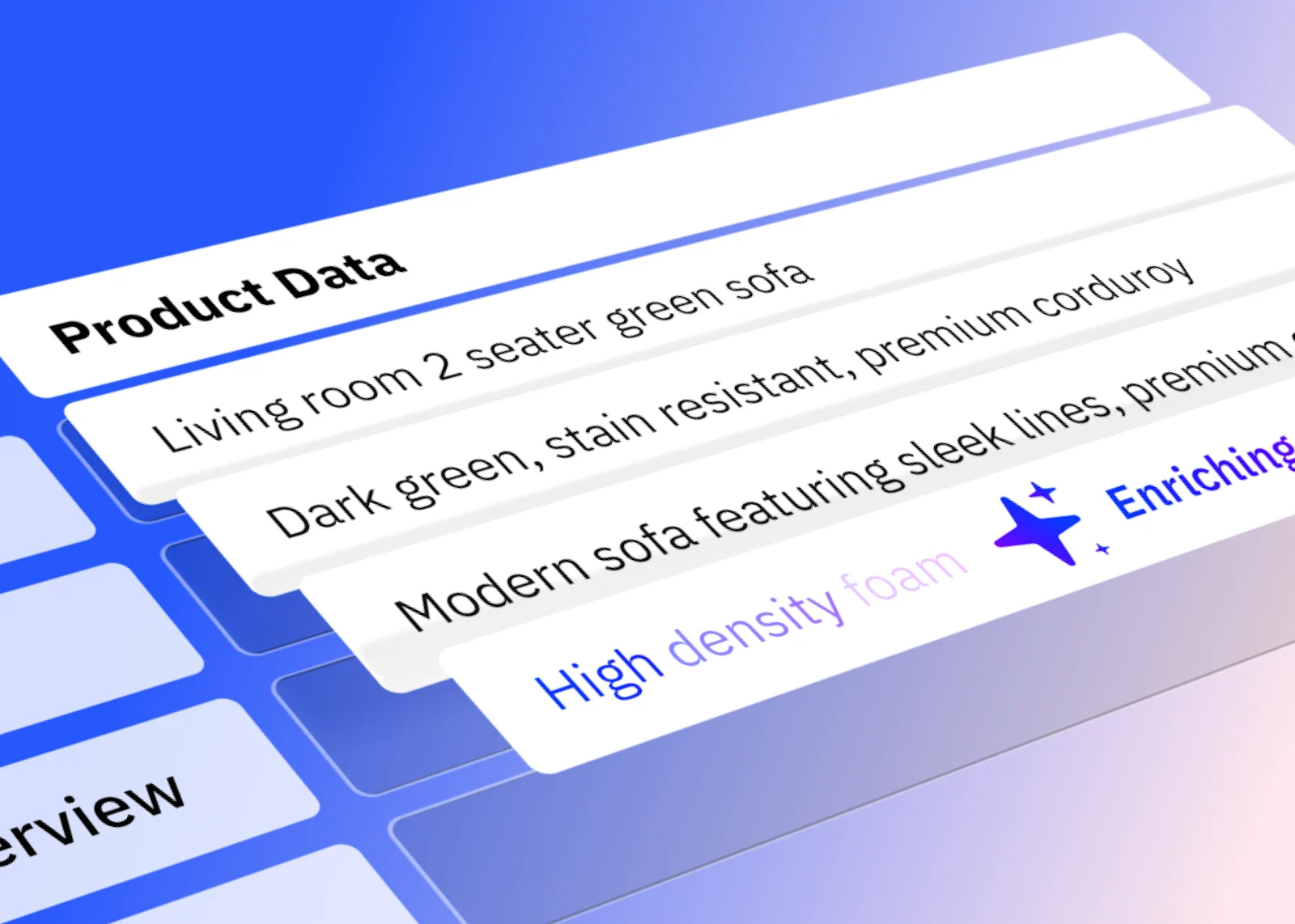
The best marketplace platforms layer AI-powered catalog enrichment on top, automatically extracting contextual attributes and adding semantic descriptions at scale.
The compounding effect
Here's what makes this particularly dangerous for single-vendor retailers: the gap is widening.
As AI platforms track which retailers deliver accurate pricing, reliable fulfillment and relevant products, they incorporate that performance data into future rankings. It's not just about today's catalog—it's about building authority over time.
Retailers with marketplace infrastructure have a built-in advantage:
- More products = more chances to match queries
- Better pricing = higher conversion when recommended
- Richer data = better semantic matching
- Reliable fulfillment = better ranking over time
Meanwhile, single-vendor sites face a vicious cycle: limited inventory leads to more out-of-stocks, which leads to fewer recommendations, which leads to less traffic and worse performance metrics.
By 2030, McKinsey estimates (opens in a new tab) agentic commerce will represent $1 trillion in US revenue—approximately 12% of total retail sales. That's not incremental growth. It's a fundamental redistribution of commerce.
The retailers capturing that trillion dollars will be those who show up when AI agents search. The data from 2,340 searches tells a simple story: marketplace infrastructure is the competitive advantage in AI commerce.
Ready to close your AI visibility gap?
See how leading retailers are building marketplace infrastructure to win in the age of AI shopping.
Watch the on-demand webinar → (opens in a new tab) Hear directly from BCG and Mirakl experts on strategic frameworks and implementation steps.
Meet us at Shoptalk 2026 → (opens in a new tab)Join us in Las Vegas March 24-26 to discuss your AI commerce strategy.