Building a high-performance, sustainable retail media program (Part 4)
In the first three parts of our series, we laid the groundwork for retail media success.
In Part 1, we explored the foundational stakeholders — the Sales House, the Website team and the Brands/Sellers — and the inherent tensions that must be balanced to protect the customer experience. In Part 2, we mapped out the three levels of the retail media maturity journey, moving from initial pilot programs to sophisticated operations. Finally, in Part 3, we discussed how your organization, technology and data must adapt as you scale.
Now, we move to the final piece of the puzzle: putting it all together on the platform.
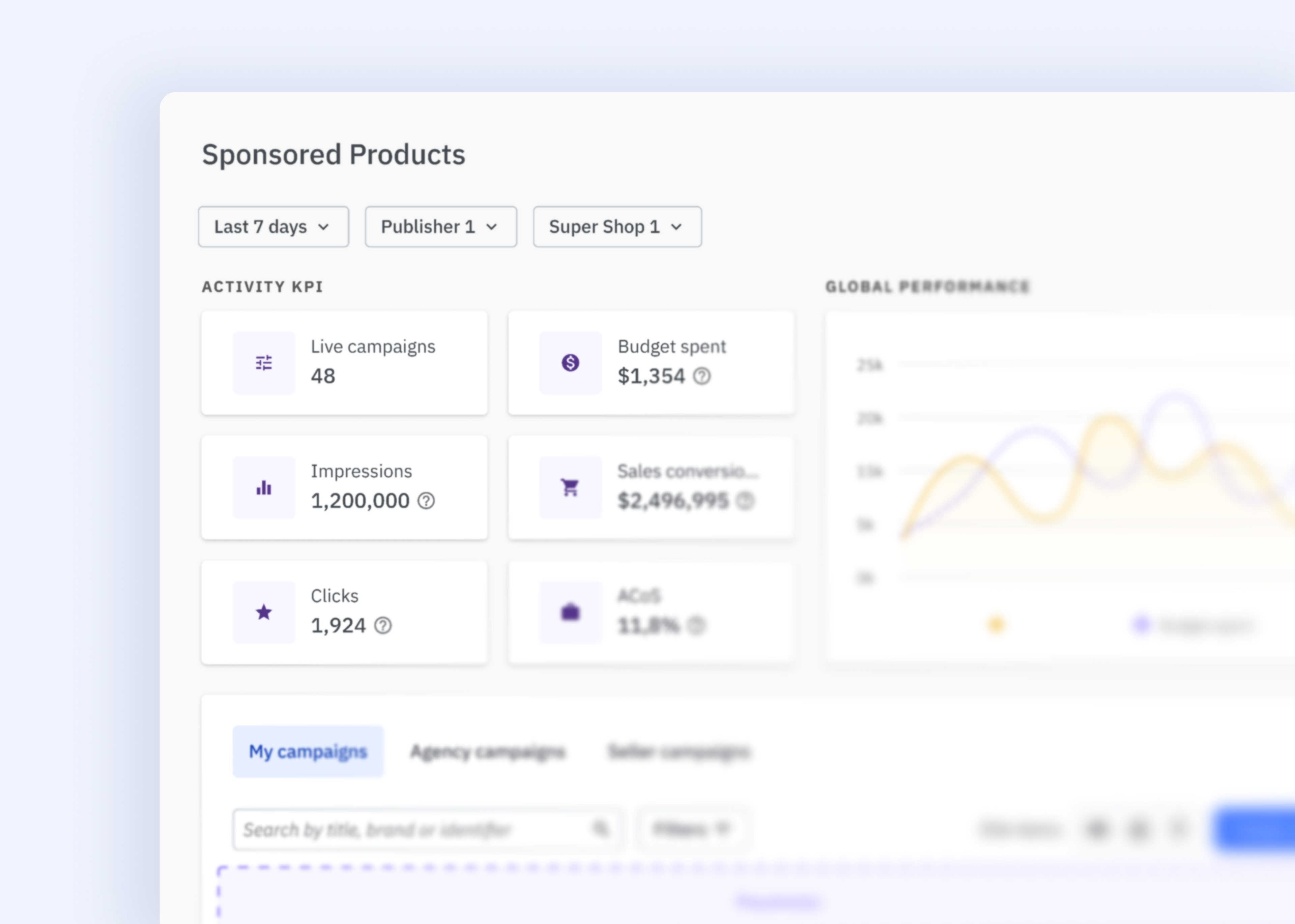
As your program grows, your technology can no longer just serve as a passive reporting tool. It must become an operational copilot. Today, we'll step inside the cockpit to see how the platform dashboard evolves at each maturity level, explore the governance required to build trust and outline the data prerequisites needed to fuel sustainable eCommerce growth.
Retail media platform views by maturity as an operator
A truly effective retail media platform guides "who should do what, where and when" to unlock business value. Here is how your dashboard and daily workflows should evolve as you scale from Level 1 to Level 3.
Level 1: Macro management of basic KPIs
At the beginning of your journey, your focus is on proving the model and achieving a stable global fill rate. Your platform view should be simple, focusing on global metrics and straightforward actions.
Here is what your platform experience should include at this stage:
Cards and alerts: The platform should flag low-hanging fruit. For example, a card might highlight "Top 20 GMV products without ads" and insert these products into the managed campaigns. Another might flag a "Fill rate <60%" and suggest activating auto-bidding for top sellers, or alert you that campaigns were cut early due to budget constraints.
Roles: The Sales House focuses on onboarding, while the Ops team handles basic settings.
Metrics to watch: Advertising cost of sales (ACOS) by category, global fill rate and daily revenue with a CPC increase.
Level 2: Structuring, category and event focus
As competition increases, you move from reassuring reporting to action-triggering insights. The platform must now help you identify where growth is being throttled. At this level, here’s what that looks like:
Cards and alerts: Your dashboard should highlight "High-potential categories" where you can add a new ad slot and launch an A/B test. It should also flag "Uncovered deals" ahead of major retail events to help you deploy specific event playbooks, or identify "Underfilled top keywords" with bid recommendations.
Roles: The Saleshouse and Site teams collaborate on new slots and user experience tests, while Sales and Trading focus on budget pacing.
Metrics to watch: Intraday pacing, A/B test success rates and recommendation adoption by sellers.
Level 3: Precision, quality and scalability
At the highest level of maturity, your platform operates with scientific precision. You are balancing maximum revenue with strict quality control for sellers to protect the core shopping experience. At this stage, it’s important your platform can handle the following:
Cards and alerts: The system should alert you to a "Gap in Bid vs. Paid CPC" and suggest a dynamic floor adjustment. It should monitor top positions and trigger a "deploy with relevancy gate" action if the organic vs. sponsored delta is healthy. Crucially, it must flag "Insufficient quality" (such as a drop in seller ratings or low stock) and automatically block those products from premium placements.
Roles: Advanced Trading handles auction mechanics, product manages quality and eligibility rules, and data teams work on predictive analytics.
Metrics to watch: Total advertising cost of sales (TACOS), keyword pressure, CPC stability and customer satisfaction.
Governance and UX in high-performing retail media platforms: The business unlock board
Technology is just the enabler. The real secret to scaling a retail media program is trust.
The Sales House must trust the website team to protect the site, sellers must trust the data you provide and customers must trust that sponsored products are relevant. To build this trust, your platform needs a "business unlock board" — a prioritized opportunity dashboard that balances value and effort.
A strong governance dashboard includes:
Filters by role and timeframe: Users should only see what matters to them, whether they need a daily view for trading or a monthly view for strategic planning.
Explainability: AI-driven recommendations are useless if users don't understand them. Each recommendation must show its source data (like fill rate, click-through rate, CPC and ACOS) alongside a clear impact hypothesis. For example: "Unlocking Advertiser X will increase monthly ad spend by $5K and boost category fill rate."
1-click actions: Users should be able to create campaigns, send recommendations to brands, open A/B tests or activate eligibility rules with a single click.
Action logs: A transparent record of who did what, when they did it and the real business impact it drove.
Platform data and prerequisites for success in retail media
Your retail media platform is only as smart as the data feeding it. To progress through the maturity levels, your data foundation must evolve in tandem.
Level 1 prerequisites: You need basic mapping of brands and sellers to their campaigns. Essential data includes impressions, clicks, spend, budgets and a clear split between organic and ad GMV. Data freshness should be day-by-day.
Level 2 prerequisites: To master intraday dynamics, you need granular data on categories, slots, promotional calendars and fill rate by segment. Data freshness must be intra-day to catch and fix midday budget cuts.
Level 3 prerequisites: Precision trading requires data on exact positions, dynamic floors, bid vs. paid CPC and product quality metrics (price competitiveness, stock levels and seller ratings). Data freshness must be near real-time, supported by execution APIs for budgets, bids and eligibility rules.
The path forward: Building a high-performing retail media program
A successful retail media program is iterative, multi-stakeholder and highly data-driven.
The temptation to "do everything" too soon — like investing heavily in complex offsite programmatic features before you've mastered the basics — must be resisted in favor of disciplined scaling. Focus on sponsored products and relevance first. Demand strict governance of your premium placements, and invest time in educating and empowering your internal teams, brands and sellers.
The ultimate goal is to integrate an orchestration layer into your platform that guides your teams from raw insight to measurable action. By building a system that continuously learns and acts as an operational copilot, you can align ad revenue, advertiser performance and customer experience quality — sustainably and at scale.
To learn more about how Mirakl Ads can help you with your retail media strategy and execution, contact us today.