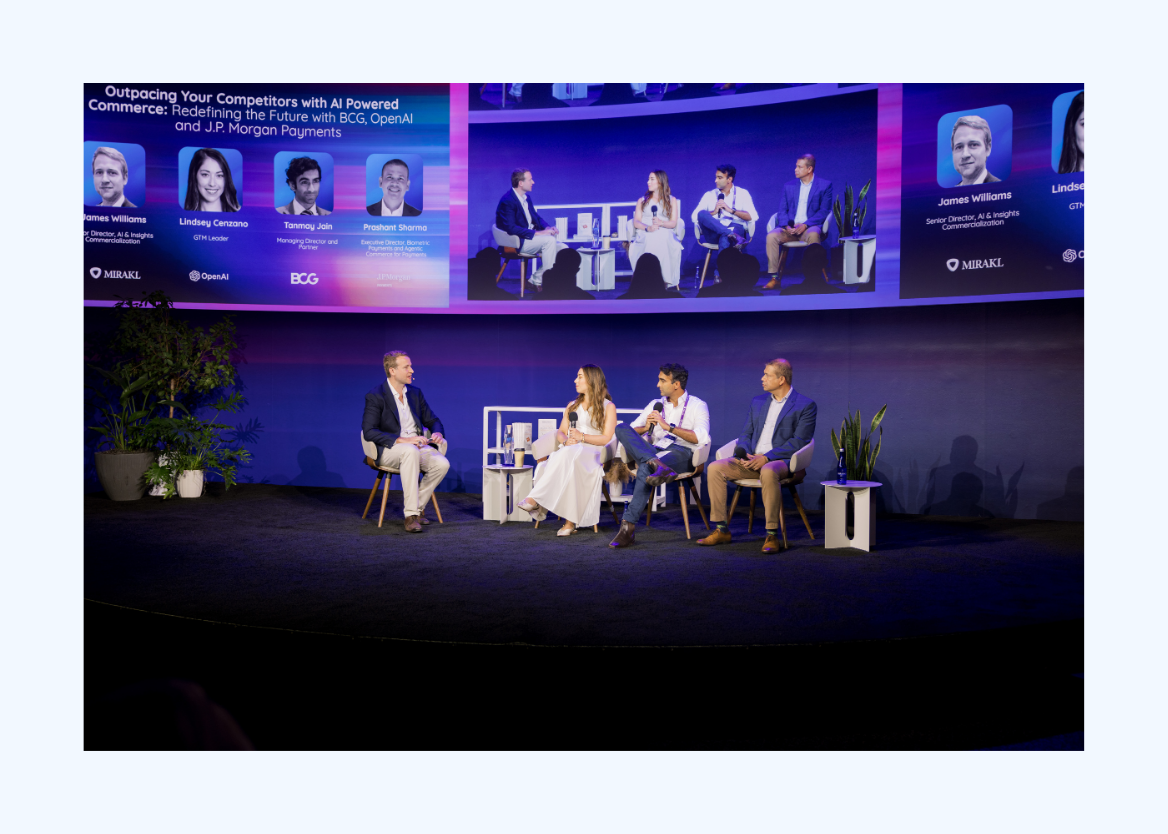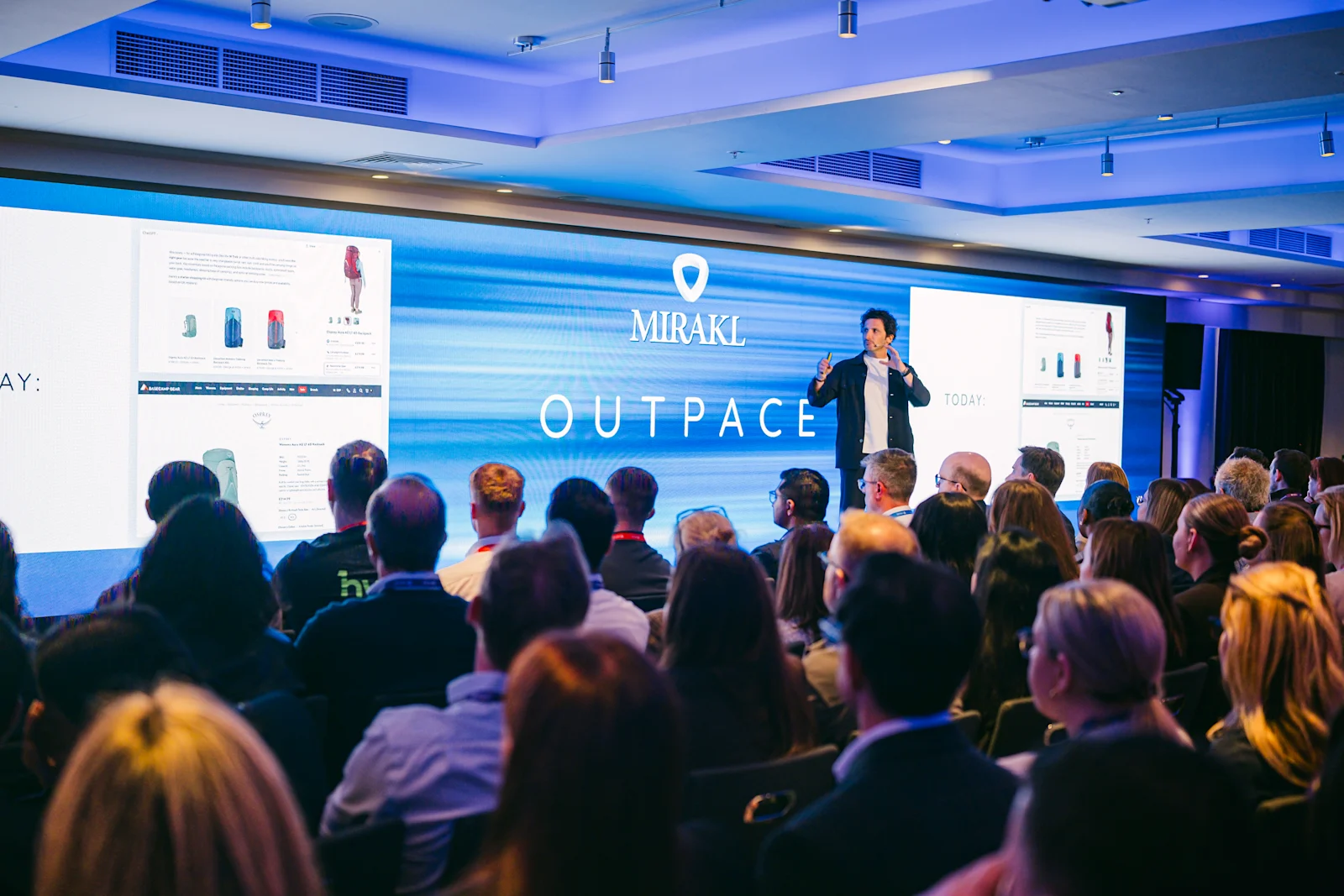

The 2026 Mirakl London Summit — the first stop in our annual series of global gatherings — convened eCommerce leaders to define the next phase of industry growth.
With speakers from H&M, Walmart, Tesco, BCG and Debenhams taking the stage, one message was unmistakable: The next era of commerce is no longer a vision for the future, it is already taking shape through the power of AI.
As Mirakl Co-founder Adrien Nussenbaum (opens in a new tab) noted, the industry has moved beyond traditional retail models into the age of intelligent commerce. Those building the right foundations today will be the ones best positioned to grow in the agentic commerce era.
Mastering discovery: moving from keywords to conversational intent
For years, eCommerce teams optimized for search rankings, category navigation and on-site conversion. While these still matter, they are no longer the whole story.
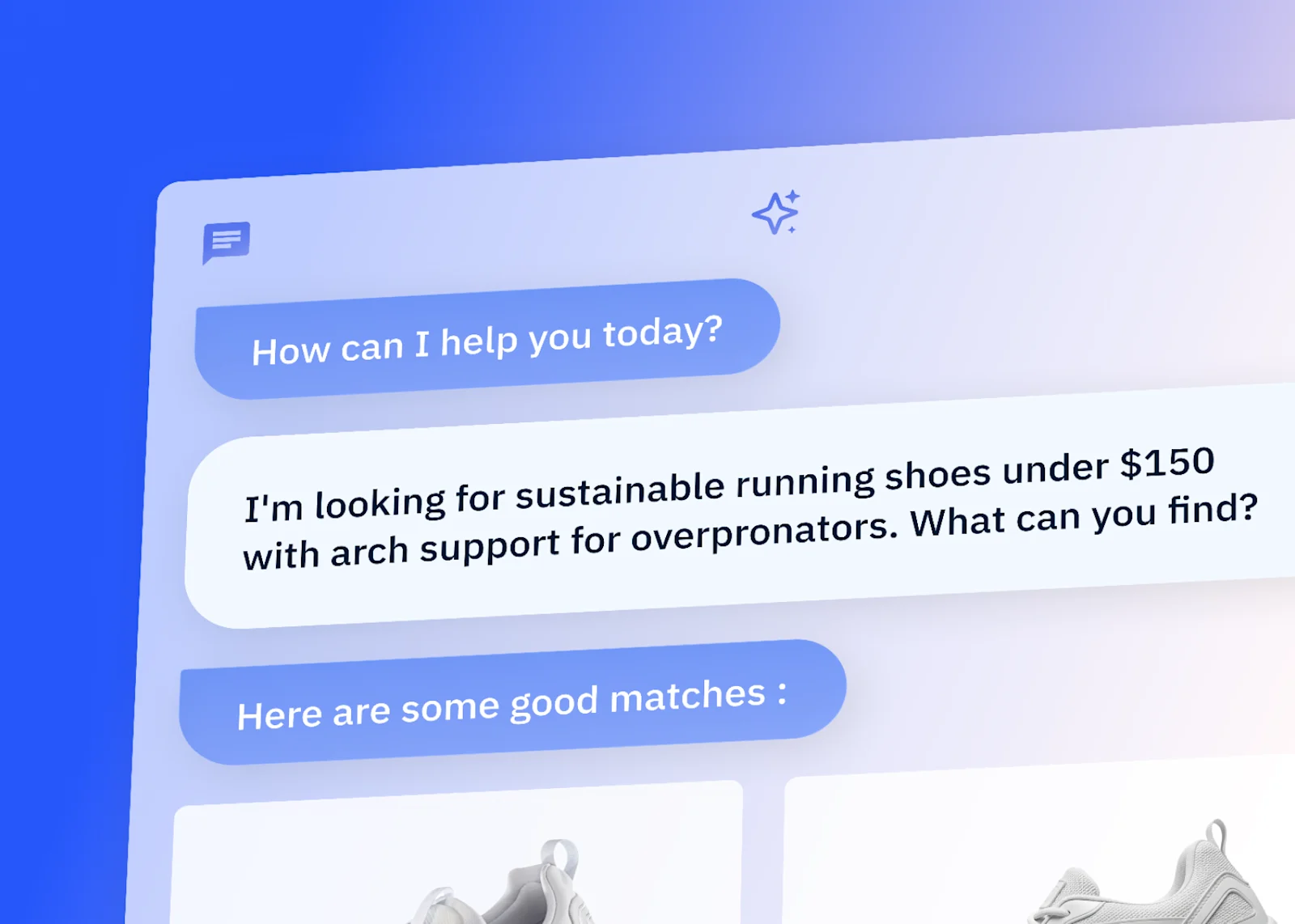
Discovery is moving into conversational environments, with large language models (LLMs) shaping what customers find, compare and ultimately choose.
The shift is real. Daniel Gospadinov (opens in a new tab), partner at BCG (opens in a new tab), shared that 81% of US consumers already use LLMs for product discovery, and 43% are interested in letting them take autonomous actions.
When these shoppers arrive from environments like ChatGPT or Claude, they are not casual browsers. They land directly on the product detail page (PDP) with a conversion intent that is approximately 38% higher than average.
In this environment, winning is no longer just about making product pages appealing to human shoppers. It is about making product catalogs readable and trustworthy for machines as well. While search engine optimization (SEO) gets you found, generative engine optimization (GEO) gets you chosen.
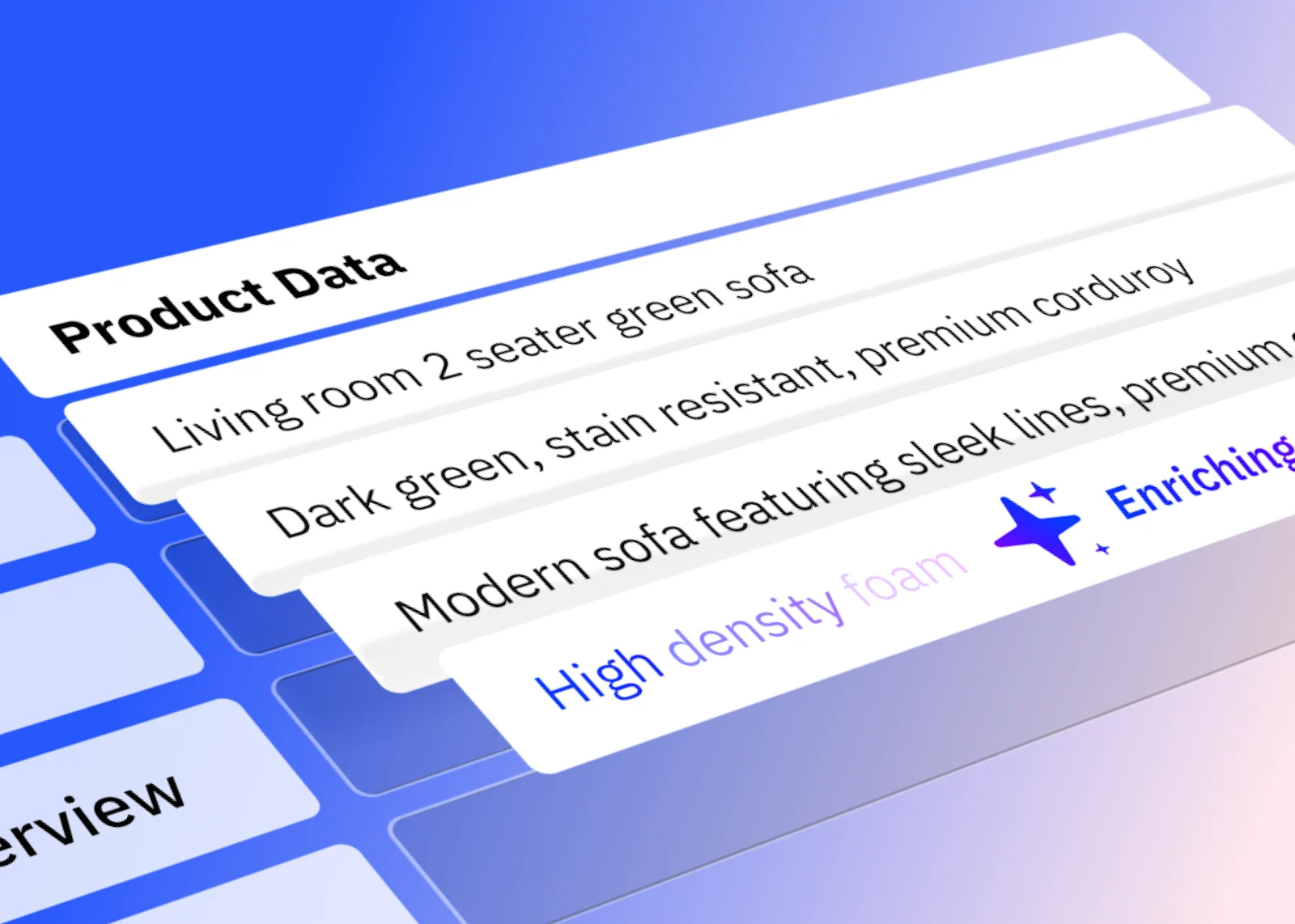
As AI-driven discovery becomes more influential, brands need to enrich their product data with metadata and intent-based attributes that go beyond basic details, helping agents understand relevance, context and fit so they can trust and recommend their products.
Pinki Choudhury (opens in a new tab), Chief Product and Data Officer at Roman Originals (opens in a new tab), highlighted the importance of data quality in this new discovery landscape, by saying that "if your data doesn't have that answer, you're out of the question," and explaining that Roman’s strategy is to enrich product data with "GEO signals," including product usage, target audiences and insights from reviews.
Scaling assortment: turning breadth into a competitive advantage
In the agentic era, the breadth and depth of a marketplace model provide a critical edge. AI prompts are richer and more contextual than keyword searches; a shopper may no longer search for a specific item like "sleeping bag" but instead ask for "everything needed for a week-long hike in the Cotswolds."
The businesses that can answer these open-ended, complex needs are the ones gaining the advantage. Tesco serves as the gold standard for this agility, scaling its assortment from 28,000 SKUs to 525,000 in just eight months after launch.
This strategy was driven directly by customer demand — such as shoppers searching Tesco.com (opens in a new tab) for TVs and previously getting no result — and was supercharged by the day-one integration of Tesco’s Clubcard program into the marketplace, giving its 24 million members a seamless loyalty experience from launch.
Similarly, Elkjøp (opens in a new tab) scaled from five sellers to about 240 sellers and approximately 200,000 offers across its four markets, expanding its assortment around broader customer "user stories." As Trond Samuelsen (opens in a new tab), Director Financial and Commercial Services & Product Data, explained, "As traffic increased, we looked for user stories. The wider our story, the more likely they will come to our platform."
Whether it is H&M using dropship as a "laboratory" to test categories like furniture and live plants or Debenhams (opens in a new tab) aiming to extend its catalog infinitely to capture long-tail demand, the goal is the same: answering customer needs with zero inventory risk and maximum speed.
Building for the future: the invisible infrastructure of platform leaders
A major theme of this year’s summit was the move beyond strategy and into operations. Ambition does not create scale — infrastructure does. Marketplace, dropship and cross-border expansion succeed only when the underlying systems can absorb complexity without passing it on to the customer.
Seller onboarding, KYC, payments, catalog quality, localized storefronts and post-transaction workflows aren’t just about adding partners faster. They are about building a model that can be replicated across markets with consistency and discipline.
This becomes especially visible in payments and compliance, where operational friction can quickly delay expansion.
On the payments side, Mia Elise Hunter (opens in a new tab), Director of Partnerships at Mollie (opens in a new tab), highlights a commonly underestimated bottleneck: "One of the most painful things is onboarding sellers. It's a common reason for holding up a launch. Having an infrastructure where sellers host their inventory simplifies backend operations."
Similarly, Tasmyn Nichols (opens in a new tab), Global Strategic Partner Manager at Vertex (opens in a new tab), emphasizes the importance of anticipating financial risk early: “Design your tax and compliance architecture from day one. Don't panic if you realize your systems aren't built for scale partway through; it's solvable, but it's better to do it before your team is googling rules right before a deadline.”
The impact of getting these operational foundations right extends far beyond payments and compliance.
H&M (opens in a new tab)’s dropship model illustrates how streamlined onboarding and system design can unlock scale. While adding 80,000 SKUs across 13 countries, they maintained a central team of only 10 people. By focusing on automated onboarding, product information support and streamlined integrations, they improved site availability for third-party offers from 80% to 99.78%.
By prioritizing automated, lean systems, retailers ensure that rapid expansion becomes a predictable engine for growth rather than a source of operational strain, laying a foundation robust enough to handle the complexity of tomorrow’s commerce without ever breaking the customer's trust.
Breaking silos: Unified ecosystems for a frictionless journey
Channel silos are becoming harder to defend. Retail media, digital merchandising, loyalty and customer service are no longer separate conversations — they shape the same journey and must work as a single system.
Tesco’s marketplace journey further highlighted this through the deep integration of its loyalty ecosystem. By making the marketplace a natural extension of the brand, customers earn points on marketplace purchases, sellers benefit from a stronger retail proposition and Tesco strengthens the halo effect between grocery and marketplace shopping.
Even as discovery shifts, the fundamentals of commerce still matter: fulfillment, loyalty and customer experience. Lucy Cooper (opens in a new tab), Chief Commercial Officer at THG Ingenuity (opens in a new tab) noted that 27% of eCommerce happens between 10 p.m. and midnight, and that simply offering free upgrades to next-day delivery led to a 4% higher retention rate.
Success in 2026 means making these high-speed fulfillment capabilities work in tandem with retail media and AI-driven discovery.
Setting the pace in the era of intelligent commerce
The 2026 Mirakl London Summit made one thing clear: the businesses that thrive in the agentic era will be those that view AI as a catalyst for a fundamental shift in commerce.
By mastering conversational discovery, leveraging the strategic breadth of marketplaces and investing in the robust infrastructure required for scale, leaders are already setting the pace.
Success now depends on breaking down channel silos and building the infrastructure that both agents and customers can trust.