Reaching new customers keeps getting more expensive, and the math of selling direct to consumers keeps getting worse, too.
Paid search and social, among the primary channels brands use to reach new customers, cost more to reach the same audiences every year, according to the latest commerce performance updates from eMarketer (opens in a new tab) and from Gartner (opens in a new tab).
Brands raise budgets, revenue stays flat, budgets go up again, and each year, you're somehow paying more to sell the same amount to the same people.
So you do what nimble sellers do, and try new things. Each move adds a little upside, but they're temporary fixes. None of them change the underlying problem: the channels you depend on to find new customers keep getting more expensive, and you can't outspend that.
But there's a way to reach new customers that exists just outside the channels you're already paying for, and your competitors are already using it to grow without increasing their ad budget.
It's selling on marketplaces.
The opportunity to sell and scale your brand through these sales channels looks nothing like it did 10 years ago, when people thought selling through marketplaces meant only selling on Amazon.
What selling on marketplaces used to mean
Ask a brand what selling on marketplaces means, and you might hear: "It's Amazon. You lose control of how your brand shows up. You compete on price against listings that look just like yours."
That was an accurate read once, but the category has changed.
Jessica Ahn, who runs operations at the K-beauty brand Siia Cosmetics (opens in a new tab), initially had that same mindset.
She thought selling on a marketplace was the online equivalent of a discount rack — a place where retailers cleared out products that weren't selling. Then she started selling on them, and that picture quickly changed.
Marketplaces are actually for very serious eCommerce now. — Jessica Ahn, Siia Cosmetics
What she found was a real retail partnership rather than a discount rack, and it surprised her, as it does most brands.
Which marketplaces can brands sell through?
Retailers your customers already know now run their own online marketplaces, and they're actively recruiting brands. Nordstrom, Macy's, Bloomingdale's, Best Buy, Walmart and Target are some of the household names you'll recognize.
But hundreds of retailers across categories now operate marketplaces, so there are likely many where your ideal customers are shopping that also fit your brand.
The number of sellers joining marketplaces grew 26% year over year, with about a third now selling on two or more platforms. Meanwhile, marketplaces are growing at 4.5 times the rate of traditional eCommerce, according to Mirakl Connect's 2026 Seller Report (opens in a new tab).
Selling through marketplaces is much different from buying more ads. On Meta, you pay to put your product in front of people who weren't shopping, and you hope it sparks the urge to buy. On marketplaces, customers are already in shopping mode, browsing a store they trust.
Your product shows up in front of the same high-intent buyers you pay to reach through ads today, closer to checkout. Many marketplaces run their own ad networks, so you can put advertising dollars to work in front of people who are ready to shop.
If your idea of a marketplace is Amazon, you're not wrong. But you're picturing a single retailer on a much larger map. Amazon is one example of a modern retail marketplace. But hundreds of others — from department stores and category specialists to regional players your customers already love — also have marketplaces where you can reach new customers and drive sales.
Angel Cerdá (opens in a new tab), a high-end furniture brand selling across Europe, is one example.
The brand was already selling on Amazon. After integrating with Mirakl Connect, it could manage Amazon alongside its other channels through the same tools that synchronize inventory and process orders.
Tools that make things automatic in the marketplace world are our priority — Diego Sierra, Marketplace Manager, Angel Cerdá
Do brands have to be invited to sell on a marketplace?
Sometimes yes, and that works in your favor. Many retailers hand-pick the brands they carry, which keeps their marketplaces curated and shoppers confident in what they find.
Jessica Ahn, from Siia Cosmetics, described her experience with Macy's: "They don't accept just any brand. They choose the brands."
With hundreds of marketplaces to choose from, the real work is finding the ones that fit your brand and are ready to take you on now. Since Mirakl Connect powers many of these platforms and works with the brands on them, it helps you find the right opportunities and get accepted.
How do brands end up selling through multiple marketplaces?
Most brands start selling on their second and third marketplace the same way Siia Cosmetics did: by performing well on the first.
Jessica said Siia earned its way onto Macy's, and the other marketplaces they now sell on came to them. Within a few months, Nordstrom invited the brand to join their marketplace. Then their Macy's account manager introduced them to Bloomingdale's.
They said, 'I heard about your brand, and we want a K-beauty section. What about joining our marketplace, too?' — Jessica Ahn, Siia Cosmetics, describing Bloomingdale's outreach
Retailers pay attention to which brands sell, and they go after the ones that stand out. But some brands still hesitate, usually because of how marketplaces used to work, not how they work now.
Here are three common concerns worth talking through. Once they take a closer look, most brands are pleasantly surprised.
Who controls your brand?
Control is the worry brands raise first, and it's a fair one.
The fear is that you hand your brand to a retailer and lose your grip on it: your products will sit beside cheaper lookalikes, your pricing will be undercut and your brand will start to look like everyone else's.
In reality, you keep the decisions that define your brand.
You're not handing a retailer a box of product and hoping they represent you well. You choose which marketplaces you sell on, set your prices, decide what you sell and control how your brand looks to the shopper. Marketplaces drive traffic, and you stay in charge of your brand.
A shopper who trusts a store extends some of that trust to the brands inside it. The right retailers tend to lift how your brand is seen, not lower it.
Do you still set your own prices when you sell on marketplaces?
Yes. You continue to make the key commercial decisions. Some marketplaces provide guidance or requirements on the minimum advertised price (MAP) policies, but you ultimately decide whether to sell on that marketplace and how to position your products.
You decide when to run a promotion or a markdown, and which products to list, allowing each retailer's shoppers to see the assortment you want them to see.
Marketplace orders can integrate with the eCommerce systems you already use — like Shopify (opens in a new tab), WooCommerce (opens in a new tab), Adobe Commerce (opens in a new tab) (formerly Magento) and many others — so you can manage fulfillment while keeping control over the parts of the experience that build loyalty.
Isn't selling on marketplaces just wholesale by another name?
No. Marketplaces work very differently from wholesale, especially when it comes to brand control.
When you sell wholesale, the retailer controls how your inventory is merchandised and sold. They can change how products are positioned, reduce prices to clear inventory or cancel orders, leaving you holding stock.
Selling directly on a retailer's marketplace, you keep more control over those decisions. You use the retailer's traffic and customer trust to reach shoppers, while controlling your pricing, presentation and customer relationship.
How much work does it take to sell through marketplaces?
Brands often picture a marketplace as a second business to run. A long build, a new hire to own it and a stack of manual catalog work that grows with every channel you add. It's the reason many brands hesitate to expand even when they see the opportunity.
The reality is much simpler.
Selling on a marketplace runs through the systems you already use. An order moves through your business the same way a sale on your own site does. You're not building a separate operation. You're adding a channel to the mix you already run.
How much work does it take to start selling on marketplaces?
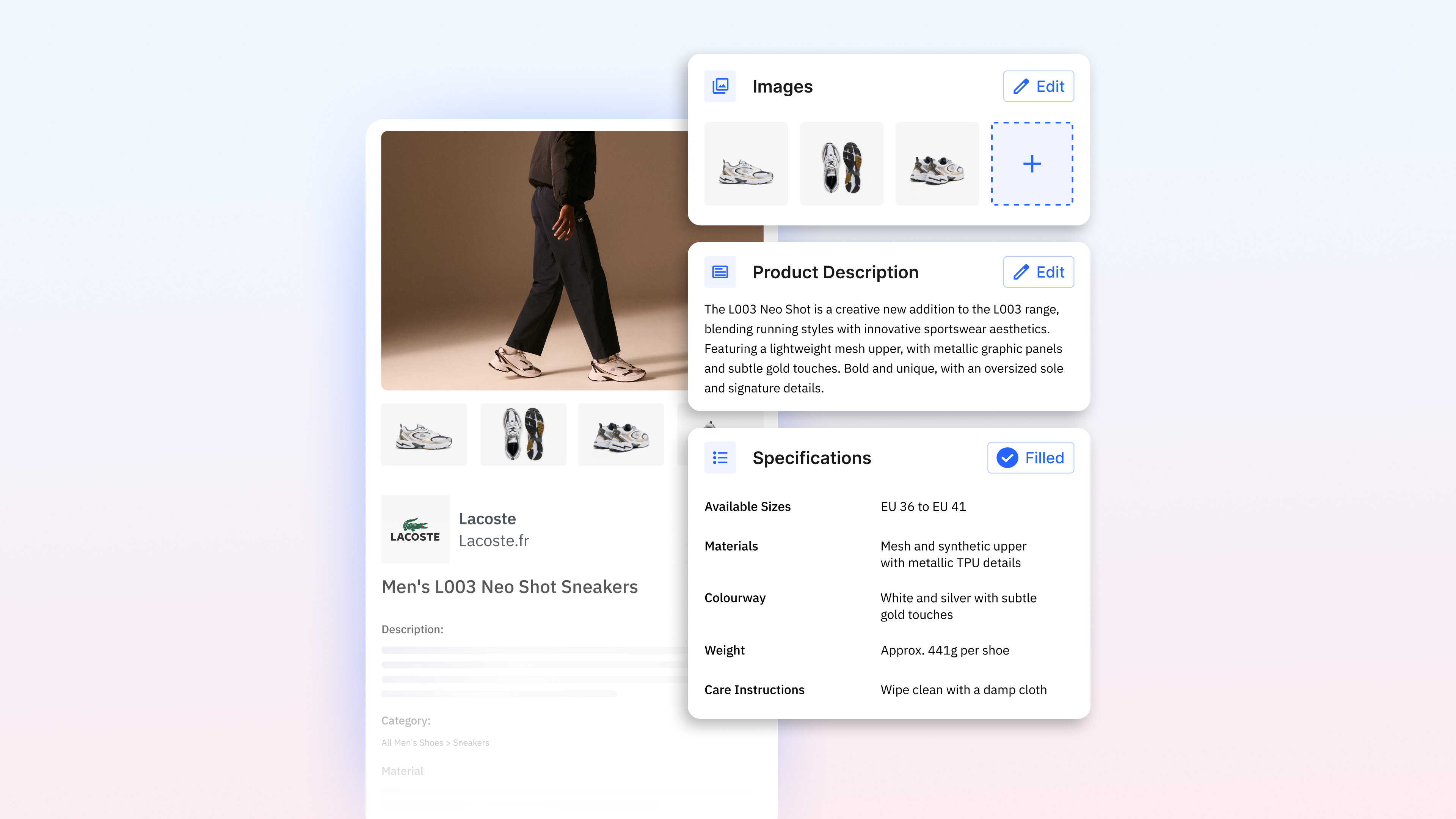
Every retailer has its own requirements for product data, including categories, fields, images, descriptions and specifications. In the past, adapting a catalog for each marketplace could take weeks of manual work.
Tools like Mirakl Connect's Catalog Transformer (opens in a new tab) help automate much of that process. The tool takes your product data (e.g., images, product descriptions, specs) and reshapes it to meet each retailer's requirements, filling in any gaps so your listings are ready to sell.
In the Mirakl Connect ecosystem, sellers who use Catalog Transformer generate 88% higher gross merchandise value (GMV) than those who don't.

According to Jessica Ahn, this tool turned one of the most dreaded parts of selling online into a non-issue for Siia Cosmetics.
"Uploading all the products is very easy with Mirakl Connect," she said. A new product that once took days to prepare now takes her about two hours.
Sellers using Mirakl Connect often find that onboarding takes an average of 28 days, with the fastest launches completed in under two weeks, according to Mirakl's 2026 Seller Report.
Can a small team manage selling across multiple marketplaces?
Yes. A marketplace operation does not require a large team or technical resources.
Jessica runs all of Siia's marketplace channels herself with Mirakl Connect, without technical knowledge. She says the reason it stays manageable is the ability to manage multiple channels from one place.
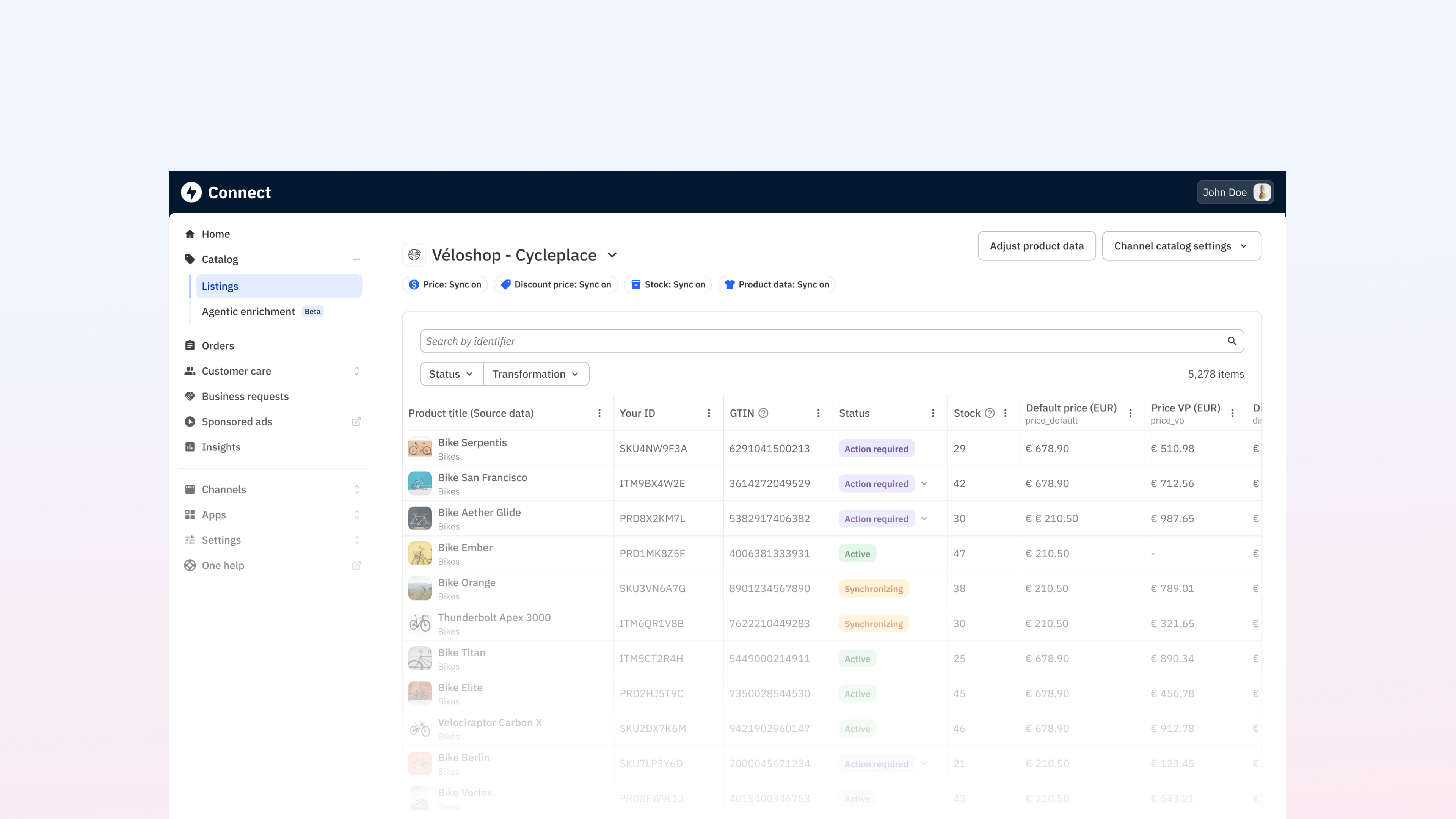
Everything from all the marketplaces is in one place with Mirakl Connect. The orders, the customer service, the inventory, I can see and manage all of it together. That part is really easy. — Jessica Ahn, Siia Cosmetics
Instead of jumping between separate systems for each retailer, she works from a single view of marketplace operations.
How do you keep inventory and pricing right across channels?
With Mirakl Connect, inventory and pricing sync automatically across every channel.
When a product sells or a price changes on your eCommerce platform like Shopify, marketplace listings can update without requiring teams to manage each channel separately.
Jessica said the hours she used to lose to that work now go toward creating better ads and finding the next marketplaces to grow on.
The brands that benefit most are the ones that previously managed every channel manually. Rokka & Rolla (opens in a new tab), a California apparel brand, ran each marketplace's system separately and had to update its catalog whenever retailer requirements changed.
After centralizing its marketplace operations with Mirakl Connect, the brand expanded to five marketplaces and grew its GMV by 80% in two years, without adding the operational costs that usually come with scaling.
Mirakl Connect is very simple to use. We can connect with major retailers like Macy's and Nordstrom much quicker and more efficiently. — Ally Cheong, Business Development Manager, Rokka & Rolla
How does selling on marketplaces impact your direct sales?
The last concern many brands have is cannibalization. If your customers can buy from you through a retailer like Nordstrom, it can feel like every marketplace sale is a missed direct-to-consumer sale.
It's true that you don't acquire new customers the same way you do on your own site.
The marketplace retailer owns the checkout, which means you don't get customer data or the chance to market to them directly afterward.
But you get something valuable in return. Instead of paying upfront to acquire every customer through advertising that may never convert, brands can reach shoppers who are already browsing a retailer they trust and actively looking to buy.
That creates a new source of traffic and revenue alongside direct-to-consumer sales.
Does selling on marketplaces hurt your direct-to-consumer sales?
No. Selling on marketplaces often helps brands grow their direct sales because marketplaces serve as discovery channels.
A shopper finds your brand through a retailer they trust, and some of those shoppers come to your own site afterward to explore the full collection and the brand experience behind it.
Ana Luisa (opens in a new tab), a direct-to-consumer jewelry brand, saw this effect after expanding its marketplace presence with Mirakl Connect.
Their marketplace revenue grew from seven figures to eight in 18 months, and their direct sales rose with it.
"Not only did we get a lot of new customers that were originally from marketplaces, but that turned into a lift in D2C sales. People came into our retail stores saying, 'I discovered Ana Luisa on Macy's, Bloomingdale's or Nordstrom, and then wanted the full brand experience.'" — Adam Bohbot, CEO and co-founder, Ana Luisa
The shoppers who find you on a marketplace can become the customers you keep.
Continue reading
Keep reading to see how brands get started, why waiting another quarter costs more than it used to and the one low-risk step that shows you whether it's worth it for your brand.