
Retail media has become one of the biggest opportunities in commerce, and one of the most elastic terms in it. For some businesses, it means sponsored products and onsite placements. For others, it includes loyalty data, trade marketing, print, digital signage, shopper marketing and the wider set of experiences that influence what customers discover and buy.
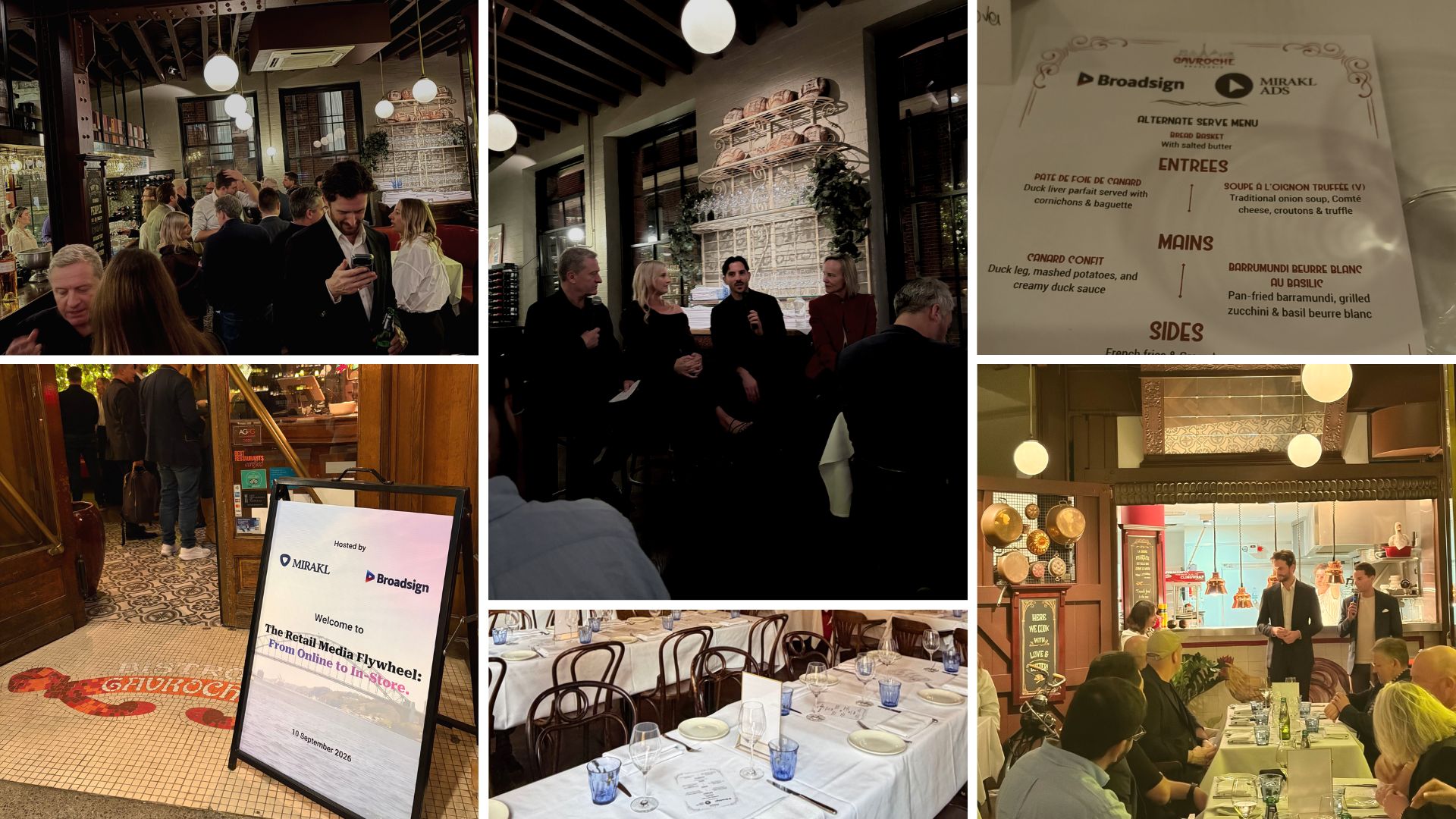
That question brought 50 people together for a dinner hosted by Mirakl and Broadsign in Sydney on September 10. Colin Lewis, Founder of Commerce Media Works was among those contributing to the discussion, alongside people from retail, brands, agencies, out-of-home media, property, technology and commerce, exploring where retail media is heading and what it takes to make it work in practice.
The room brought together a diverse mix of retail and media players, spanning pharmacy, grocery, convenience, travel and more, alongside agencies, brands, shopping centre groups and technology providers. Bringing these different perspectives together created a rare opportunity to explore the market from all sides, with attendees engaging openly on what is working, where challenges remain and where the industry is still looking for answers.
Retail media is not one-size-fits-all
One of the clearest themes was that retail media means different things to different organisations.
That flexibility creates opportunity, but it can also lead businesses to make investments that do not suit their customers, capabilities or brand. The question is not whether a business should pursue retail media because everyone else is doing so. It is where media can create genuine value.
For some, that may be sponsored product and onsite discovery. For others, it may be connecting first-party data with in-store experiences, extending supplier relationships or creating more relevant customer journeys across owned and unowned inventory.
The in-store opportunity is clear. The value is not always easy to define
A significant part of the conversation focused on stores, screens and the challenge of understanding how these assets work together.
Retailers know they have physical locations, customer traffic and increasingly sophisticated media surfaces. The challenge is how to value and price that opportunity, then activate it as part of a broader campaign.
In-store media cannot simply be online media transferred into a physical environment. Its value may come from context, proximity to purchase, product discovery or the quality of the customer experience. That makes measurement, relevance and activation essential.
Trust is part of the proposition
Agencies and brands are not buying from an anonymous platform. They are buying from organisations with a reputation, a point of view and a way of working.
A network needs to be clear about what it stands for, what kind of customer experience it wants to create and how it will work with partners. Building support inside traditionally conservative businesses also requires explaining why a consistent brand voice and clear point of view matter commercially.
The questions still open
The evening left the room with better questions, including:
- How should in-store media be valued, priced and activated?
- How do retailers connect stores, screens, eCommerce and loyalty?
- Where does trade marketing end and retail media begin?
- Could AI agents become a new kind of saleshouse, driving engagement and retail media spend?
There are no simple answers to all of these questions yet, but the conversation is moving forward. AI is already beginning to reshape how retail media is planned and activated. For a deeper look at what that could mean, read Mirakl’s guide to AI-powered retail media (opens in a new tab), it's worth the read. If you'd like to learn more about how in-store digital signage is helping forward-thinking retailers scale their retail media networks, and how it could work for your own stores, explore Broadsign's latest playbook (opens in a new tab).
Partnerships are helping bring online and in-store channels closer together. The Mirakl Ads and Broadsign partnership (opens in a new tab) is one example, connecting online retail media and in-store digital signage to help retailers build a more unified approach across channels.
Technology is an important part of that shift, but so are the relationships, trust and shared understanding needed to make connected retail media work in practice. For Mirakl and Broadsign, this conversation is just getting started.
Want to explore the partnership? Visit Mirakl Ads (opens in a new tab) and Broadsign (opens in a new tab) to learn more about connecting online and in-store media.