
What’s in this article
- CarParts.com (opens in a new tab), which carries more than 1.5 million automotive parts and accessories, is expanding its selection through CarParts Connect, a marketplace and retail media network powered by Mirakl.
- Automotive marketplaces depend on product data that helps shoppers match parts to the specific vehicles they own.
- Fitment is only one part of the decision. Shoppers also need information about installation, shipping, returns, regulations and other product details.
- By bringing third-party sellers and their data into one marketplace, CarParts Connect can expand assortment, improve the shopping experience and open new revenue opportunities tied to shopper intent.
What makes a larger auto parts catalog useful? Not the number of listings alone.
Shoppers need to find the right part, understand what they are buying and trust that it will work.
Marketplaces already play a major role in how people buy auto parts online. Third-party marketplaces account for nearly half of U.S. online aftermarket parts sales, according to the Auto Care Association’s 2025 online sales forecast (opens in a new tab). The forecast estimates approximately $44.6 billion in total online aftermarket parts sales, with about $23 billion in sales outside marketplaces.
Marketplaces give retailers a way to expand selection through more sellers, brands and products. For CarParts.com (opens in a new tab), CarParts Connect will extend that opportunity to third-party sellers when the marketplace and retail media network, powered by Mirakl (opens in a new tab), launches in December 2026.
Building on CarParts.com (opens in a new tab)’s established automotive expertise, CarParts Connect will help shoppers discover and compare a broader range of products. Fitment and compatibility data will help them choose the right parts for their vehicles with confidence.
Strong product data makes a larger catalog more useful
More products are not enough. An automotive marketplace needs product data that makes those products easier to find, understand and trust.
That requires product data that can answer three questions:
- Does this part fit my vehicle?
- What do I need to know before I buy it?
- Can I trust that the information is accurate and consistent?
Fitment is the clearest automotive example. A part may fit one combination of year, make, model, engine, body style or emissions configuration, but not another. Industry standards such as ACES (opens in a new tab) and PIES (opens in a new tab) help suppliers, retailers and sellers structure that information consistently.
Behind a simple vehicle selector is a complex set of product and vehicle relationships. For shoppers, the experience should be straightforward: select a vehicle, see the products that match it and understand what to expect before placing an order.
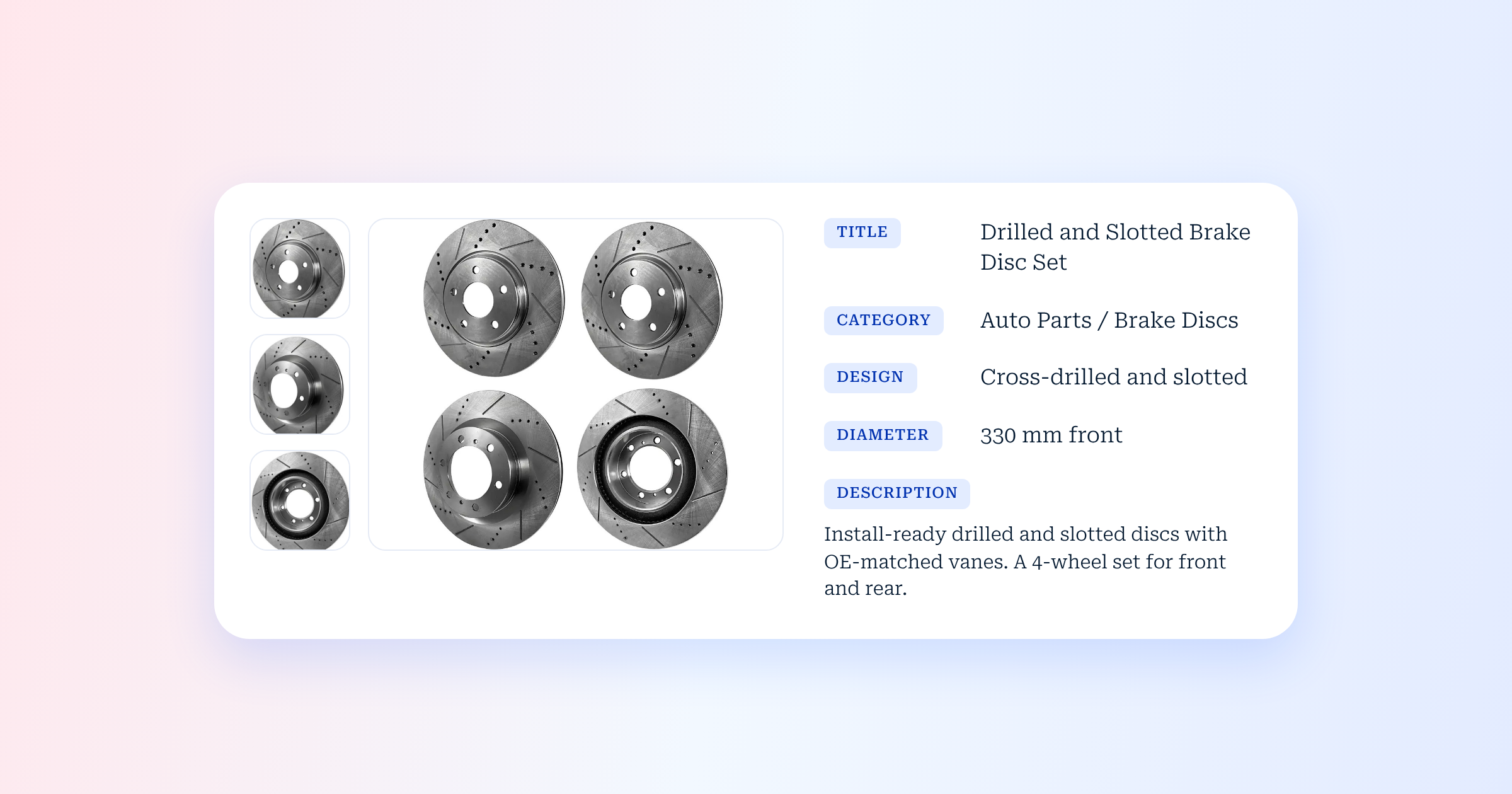
Fitment is only part of the decision. Shoppers may also need to know whether a part includes installation hardware, requires professional installation, carries a core charge, has special shipping requirements or is subject to regional restrictions.
As a retailer adds third-party sellers, it has to bring all of that information into one catalog. That is where marketplace capabilities can help turn more product data into a better shopping experience.
What a marketplace adds as the catalog grows
More assortment without taking on every product
When a retailer expands the assortment it owns and sells directly, it typically sources, buys and manages the inventory through its supplier network. A marketplace adds another route: qualified third-party sellers and brands can contribute products directly.
That lets a retailer enter new categories, add specialty products and offer more choice without purchasing and holding every item itself.
For CarParts Connect, the initial assortment is expected to include universal parts and adjacent categories such as accessories and tools. Marketplace operations will support that expansion by helping CarParts.com (opens in a new tab) recruit, onboard and manage sellers, with visibility into orders, seller performance and quality control. That creates value across the marketplace:
- Shoppers get more products to choose from, along with the product information they need to find relevant products and make confident decisions.
- Sellers and brands get access to an established automotive audience and a new way to reach shoppers with relevant products.
- CarParts.com (opens in a new tab) can broaden its assortment through a larger partner ecosystem while creating new revenue opportunities, including retail media.
One catalog experience across many sellers
Third-party sellers bring valuable product knowledge, but they may submit information in different formats and use different naming conventions. One seller may provide detailed fitment data, while another may organize its product attributes differently.
Catalog management helps bring those inputs into a common structure. Seller data can be mapped to a common catalog structure, matched to existing products and reviewed against listing requirements before it reaches shoppers. AI-driven matching can help reduce manual work when sellers submit information in different formats.
This is particularly important in automotive, where a listing needs to connect the product to the right vehicle applications and provide the context shoppers need to make a decision.
The marketplace does not replace the seller’s product expertise. It makes that expertise easier to use across the shopping experience.
A strong catalog management process gives the marketplace a way to check:
- Does each seller provide the required fitment and product information?
- Does the data match the correct brand, part number and product?
- Are duplicate products represented consistently?
- Are important attributes, restrictions and installation details included?
- How should the marketplace handle product updates or removals?
- How will the team identify and correct errors?
The clearer and easier the submission and review process is for sellers, the faster the marketplace can add high-quality products. A consistent catalog makes it easier for shoppers to search, compare and buy.
New value from existing shopper intent
Automotive shoppers often arrive with a specific need. They may be searching for a replacement part, looking for an accessory for a particular vehicle or comparing options from several brands.
Search is more than a path to purchase. It is a signal of what a shopper needs.
Retail media gives sellers and brands a way to respond to that intent through sponsored product listings and onsite display.
When those placements use accurate product, fitment and compatibility data, they can reach shoppers when the promoted products are most relevant to their needs.
For CarParts.com (opens in a new tab), that opens a new revenue opportunity. For sellers and brands, it creates a way to reach shoppers who are already searching. For shoppers, the experience is strongest when promoted products are genuinely relevant to their vehicle and their needs.
According to eMarketer research presented at Groceryshop in September (opens in a new tab), retail media networks expect sponsored search and onsite display to be among their top sources of near-term revenue growth.
The capabilities behind marketplace growth
As CarParts Connect launches and scales, CarParts.com (opens in a new tab) will use marketplace capabilities to manage the operational work behind its third-party seller network. These include seller recruitment and onboarding, catalog management, retail media and seller payouts.
Together, these capabilities create a foundation for growth: sellers can bring products to the marketplace, teams can maintain a consistent catalog, brands can reach shoppers through relevant placements and payments can be managed throughout the seller relationship.
The result is a marketplace that can broaden assortment, improve the shopping experience and create new revenue opportunities without requiring CarParts.com (opens in a new tab) to manage every product directly.
Read the announcement (opens in a new tab) to learn more about the launch, or apply to become a CarParts Connect seller (opens in a new tab).
The lesson extends beyond automotive
Is this challenge unique to automotive? Not really.
Fitment is specific to auto parts, but the underlying question appears across commerce: will this product work with something I already own? Shoppers buying a phone case, printer cartridge, appliance accessory or replacement filter need the same answer.
Automotive makes the challenge especially visible because compatibility can depend on so many variables. As catalogs grow, reliable product data becomes more important for search, recommendations and AI shopping agents.
In BCG’s 2026 survey (opens in a new tab), 67% of retailers said they plan to enrich their product data as AI shopping agents begin to influence where shoppers buy.
More products do not automatically create more growth. The catalog has to help shoppers find the right product, understand why it fits and trust the marketplace to deliver on that promise.
If you are building or scaling an automotive marketplace, talk to the Mirakl team (opens in a new tab) about marketplace growth, product data and catalog quality.