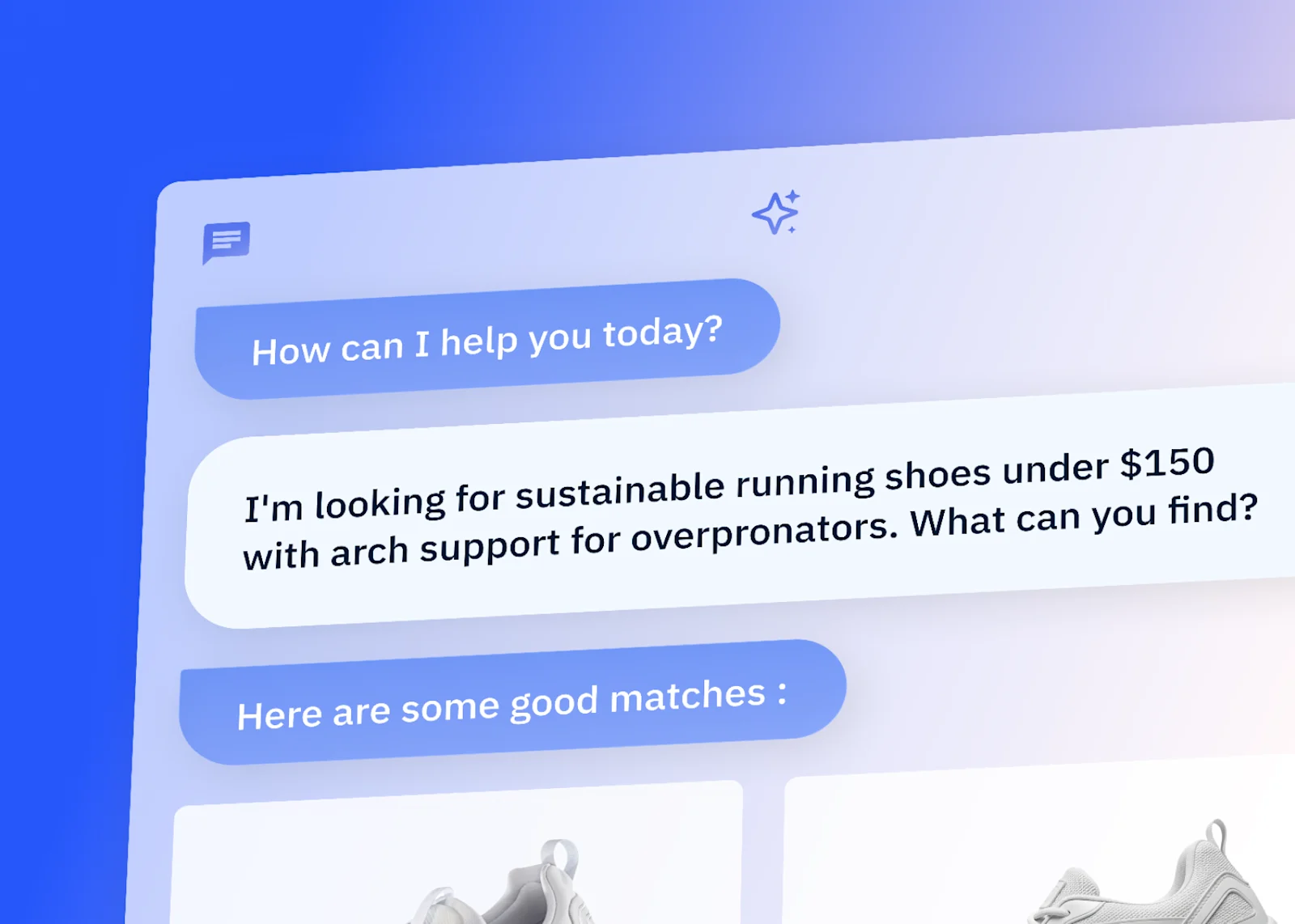

The conversation about agentic commerce has evolved.
It's no longer just that consumers are turning to tools like ChatGPT, Perplexity and Gemini to discover products — it's that they trust those tools more than advice from friends and family (opens in a new tab) by a 2:1 margin. Meanwhile, research from Semrush projects that AI-driven search traffic will surpass traditional search traffic by 2028 (opens in a new tab).
This isn't a trend on the horizon. It's an inflection already underway.
But here's the disconnect: While consumer behavior has leapfrogged ahead, the vast majority of eCommerce product pages aren't remotely ready for the AI engines consumers now trust most. An analysis of more than 400 product pages across 35 countries (opens in a new tab) reveals just how wide that gap is — and how much revenue is at stake.
The data tells a clear story
Most eCommerce product pages lack the rich content, structured data and authentic reviews that large language models need to confidently recommend them to shoppers.
In fact, the average page scored just 48 out of 100 (opens in a new tab) on a generative engine optimization (GEO) readiness scale. Two-thirds of pages earned only an "average" rating — meaning they're partially optimized at best and give LLMs little reason to surface them.
Perhaps the most striking finding: fewer than 1% of pages scored above 80 (opens in a new tab). Out of 427 pages analyzed, exactly one reached that threshold.
The biggest blind spot is user-generated content. Reviews, ratings and Q&A, the exact social-proof signals LLMs weigh most heavily, scored just 22% of their potential (opens in a new tab), with well over a third of pages showing zero UGC at all.
Structured data is nearly as weak. Only 9% of pages achieved strong schema markup scores (opens in a new tab), meaning AI agents can't reliably parse product attributes, pricing or availability.
The gap between where product pages are today and where they need to be for AI-powered discovery is massive. The brands that close it first will hold a disproportionate advantage.
Why the window is narrower than you think
The conventional wisdom says transactional AI commerce — buying directly inside an LLM — is still in its infancy. That's likely true. But treating that as a reason to wait misses the point entirely.
Discovery is already the game. And when AI is the most trusted recommendation source for consumers, the brands it *can't* confidently recommend effectively don't exist.
There's also a financial argument hiding in the data.
Semrush found that the average AI search visitor is 4.4 times more valuable (opens in a new tab) than a traditional organic search visitor, based on conversion rate. By the time someone arrives at a product page through an LLM recommendation, they've already compared options and evaluated specs. They arrive with strong intent.
Think of it like the early days of SEO. Brands that invested before the field got crowded dominated for a decade. GEO is the same inflection point, but with a narrower window.
The opportunity is huge, with fewer than 1% of pages truly optimized for this new era of shopping. But, that window of opportunity will shut much faster with GEO than it did with SEO.
From discovery to channels
Optimizing for AI discovery is the urgent first step, but it's also the foundational layer for what comes next — selling directly within AI-powered channels.
LLMs are beginning to enable in-context product recommendations, comparisons and, increasingly, transactions. But showing up in discovery is the starting point.
Retailers will need to build on that foundation by integrating product feeds, enabling real-time inventory and pricing signals, and creating seamless purchase pathways within AI environments, in order to fully capitalize as these channels mature.
The playbook is sequential:
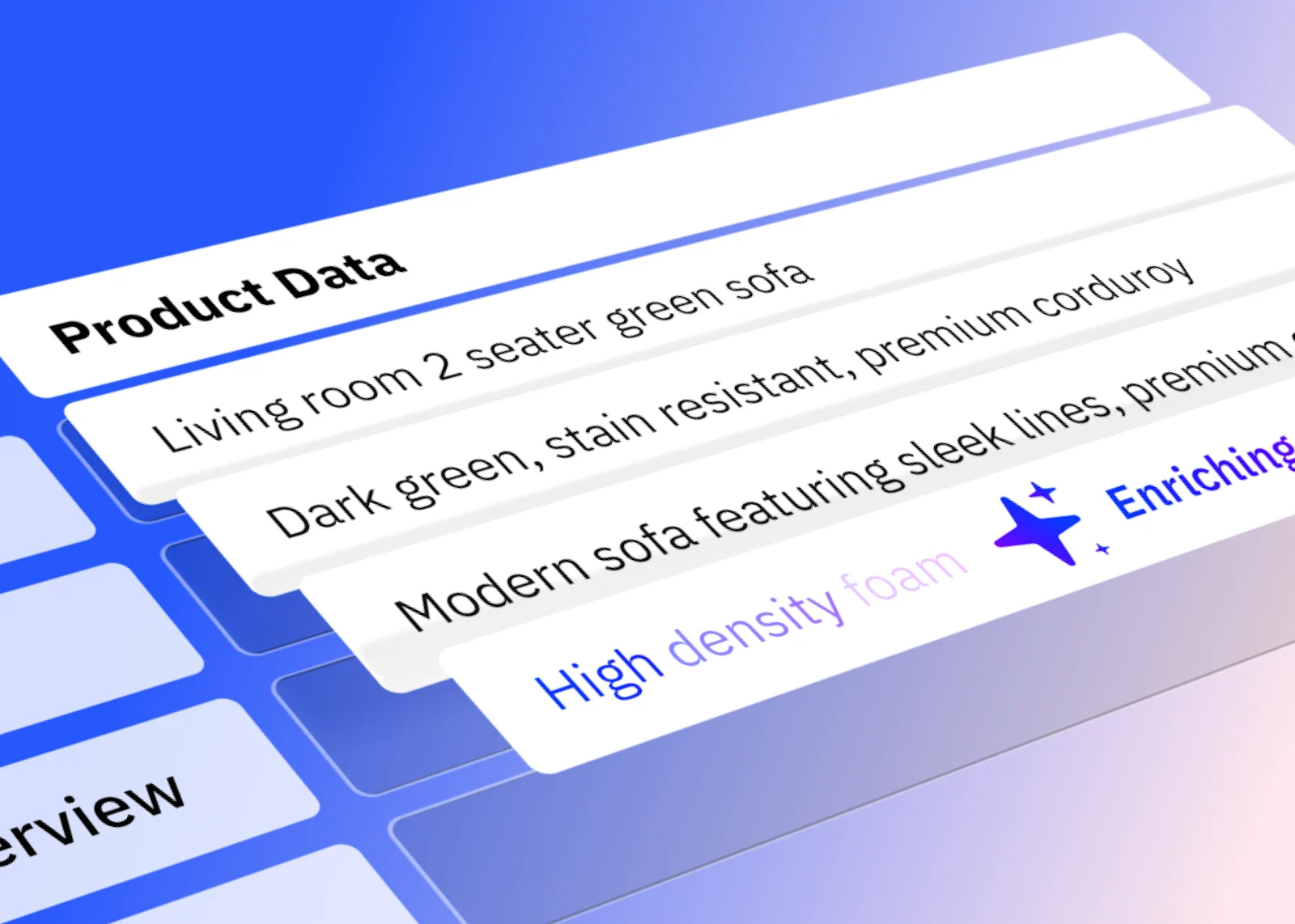
- Now: Lay the foundation (opens in a new tab) by optimizing product data for AI discovery, including structured data, content quality, UGC and visual metadata. Enriching this product data leads to more AI referral traffic, today, which converts at higher rates than traditional discovery methods. More importantly, without this base layer, nothing else works.
- Next: Build on that foundation to activate AI-native selling channels (opens in a new tab) — connecting commerce infrastructure to LLM environments so products are not just discoverable but buyable. The floodgates haven't opened yet, but the retailers building this stack today will have a decisive head start when they do.
The question isn't "if," but "when you start"
Consumers already trust AI more than the people in their lives. AI traffic is projected to surpass traditional search within two years. And yet, fewer than 1% of eCommerce product pages are truly ready for this shift.
The question is no longer whether AI will reshape how consumers find products. It's whether your products will be the ones AI finds.
To see how your product pages measure up, run them through a free GEO readiness analyzer (opens in a new tab) or explore the full dataset (opens in a new tab) behind this analysis.