
A recent Boston Consulting Group (BCG) study found that 96% of retailers are exploring AI (opens in a new tab). But that “exploration” often consists of chatbot pilots, proofs of concept and projects that never go live.
As agentic commerce advances, that raises an urgent question: How quickly can retailers turn experimentation into agents that work in production? Those that remain in pilot mode risk falling behind companies already making that transition.
For commerce leaders, the transition affects the entire shopping experience, from how agents find products across marketplaces to whether pricing and inventory are accurate when agents are ready to buy.
At Mirakl's annual Summit in New York City (opens in a new tab) this June, James Williams, Mirakl's Head of AI and Insights, sat down with leaders from OpenAI, BCG and J.P. Morgan to explore AI’s current impact on product discovery, marketplace data, payments and post-purchase support.
AI commerce: Why the pace of change is different this time
Commerce has already moved through eCommerce and mobile commerce. Now comes generative AI commerce, which is evolving faster than anything before it.
That speed is changing how companies deploy technology. As Tanmay Jain, Partner at BCG, explained: “The leaders are saying, ‘how do I get quickly to value? How do I launch proof of concepts within a matter of four to six weeks?’ The technology is there today.”
That leaves retailers and marketplace operators with a pressing question: What role will they play as AI changes how consumers discover and buy products, and where will they create value?”
OpenAI’s Head of Go-to-Market Lindsey Cenzano, pointed to how quickly the role of agents is expanding: “Now we're looking at agents and they're able to go across multi-step processes and take action on our behalf.”
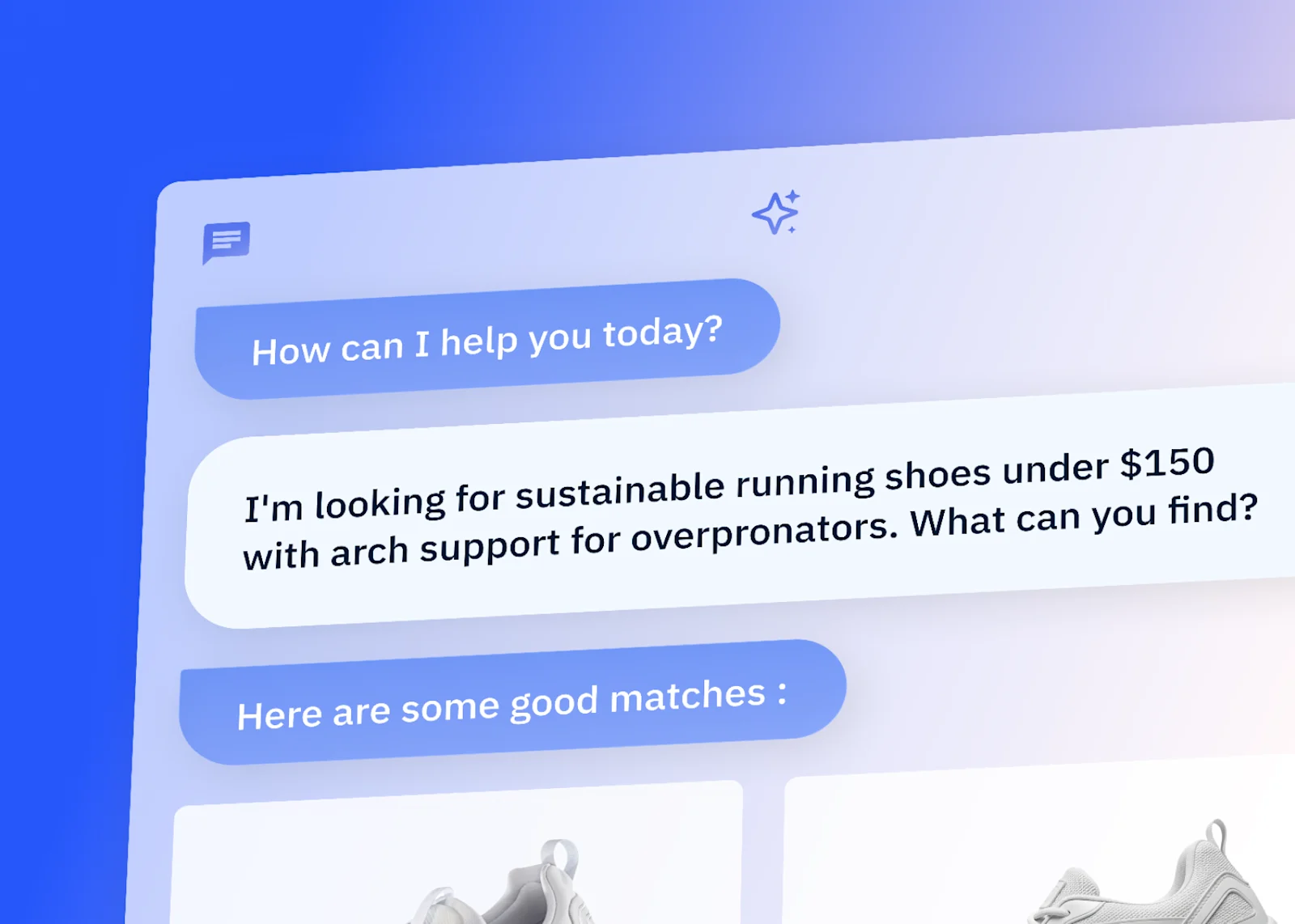
Agents are now moving beyond answering questions to helping shoppers compare products, make recommendations and complete purchases. While agents aren't transacting autonomously at scale yet, retailers can prepare their data and systems now.
Why most brands (96%) are still ‘exploring’
Retailers are experimenting with chatbot pilots, Microsoft Copilot deployments and proofs of concept. But far fewer have moved beyond testing and put AI to work across the business.
True enterprise readiness, according to BCG, starts with these foundations:
- Rich data that is well structured and machine readable
- Proprietary agent experiences on your own site
- AI systems that can support new agents quickly as their use expands
For marketplace leaders, meeting these foundations means giving agents accurate, structured product, pricing and inventory data across hundreds or thousands of sellers.
However, moving from AI pilot to production can expose problems. Cenzano said performance can drop once an AI tool reaches real users, requiring teams to revisit evaluations, incorporate feedback and keep improving.
"We don't want folks to throw their hands up and say, well, that didn't work. Now let's move on to something else," said Cenzano.
Despite the challenges though, more AI agents are making it into production.
“I wouldn’t say anyone has totally cracked it,” said Jain. “But over the last six to 12 months, the number of agents being deployed at scale and driving revenue has increased significantly.”
One beauty retailer BCG worked with saw a 60% increase in conversion among customers who used its onsite agent. Another retailer improved its share of large language model (LLM) referrals by 25% after a four-week generative engine optimization (GEO) project.
10/20/70 rule: AI is a people and process problem, not a model problem
Everyone has access to the same AI foundation models. So why are the results so different?
Jain said the difference is rarely the model itself. BCG's 10/20/70 rule explains why.
- 10% of AI value comes from the agents
- 20% comes from the technology and data
- 70% comes from the operating model, infrastructure and change management around them
Most companies focus on the first 30%. The bigger opportunity lies in the harder 70% that involves redesigning processes, changing how teams work and preparing the organization to scale AI.
So what are AI leaders doing differently?
Making AI a CEO topic, not a technology topic: The fastest-moving companies have senior leadership treating AI as a business concern, led from the C-suite with clear expectations for results.
Prioritizing tangible business value: Commerce leaders focus on areas where AI can increase conversions, speed up seller onboarding, improve product discovery and decrease the manual work of managing marketplace catalogs.
Redesigning the process, not adding AI to a broken one: A common question among retailers is: Where can an agent make this process more efficient? A better question is: If we started with a blank page, what would this process look like? What should the human do? What should the agent do? Regarding marketplaces, that could mean rethinking how seller catalogs are onboarded and updated rather than just adding AI to each step of an existing process.
GEO: The shift from being ranked to being recommended
Generative engine optimization, or GEO, has become an immediate priority in agentic commerce.
Retailers and marketplace operators that once focused on ranking product pages in search results now need their products to appear in recommendations from ChatGPT, Perplexity and other LLMs.
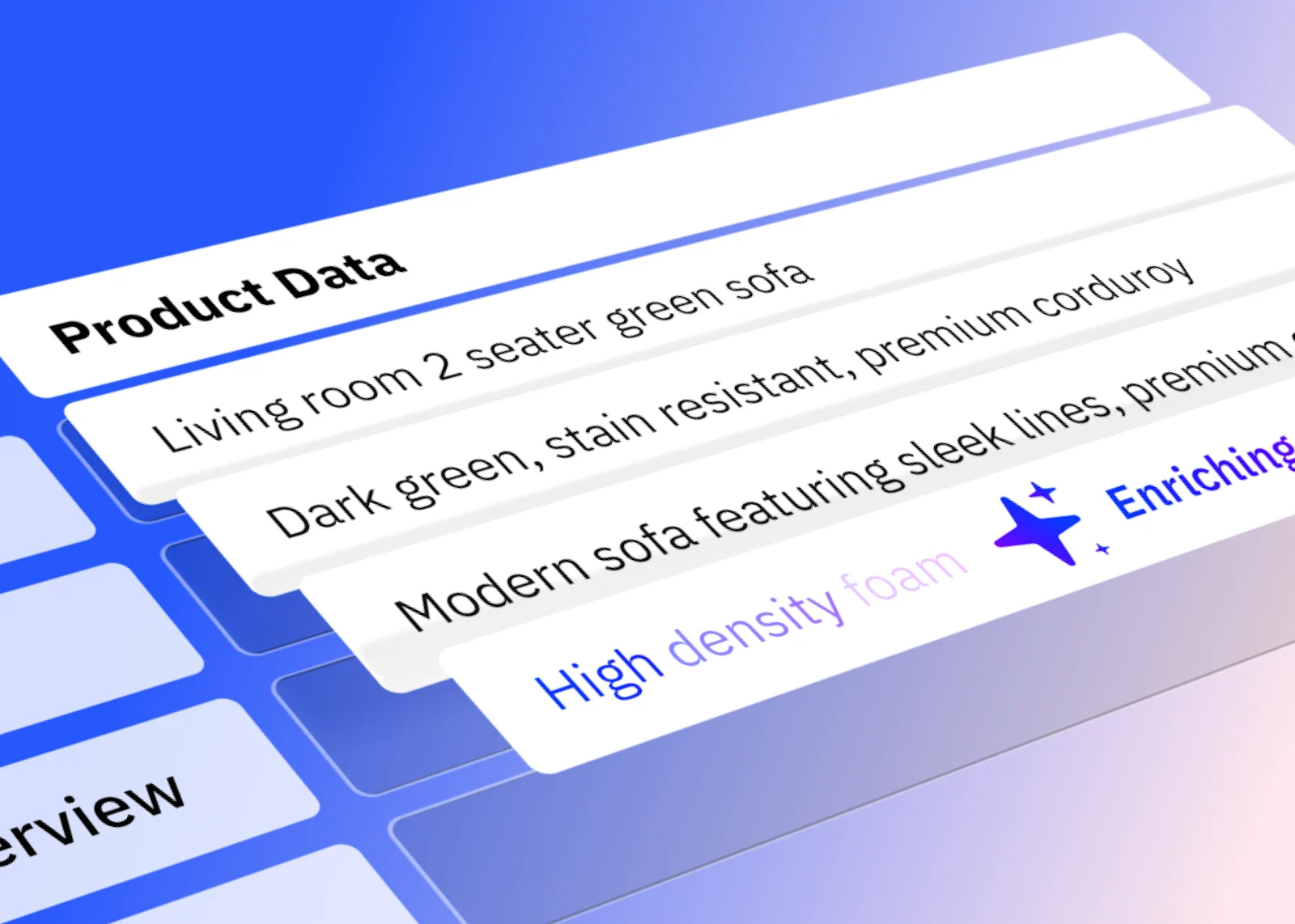
GEO success also depends on seller product data. Missing attributes, inconsistent categories and vague descriptions make products harder for agents to understand and recommend.
Winning third-party LLM recommendations
BCG's framework for GEO starts with three foundations.
Rich content: Add context, not just specifications. Include occasion-based attributes, detailed FAQs and editorial content that help agents match products to specific user needs (opens in a new tab).
Structured data: Make product information easy for agents to read with schema markup and machine-readable content (opens in a new tab). Some retailers are also creating AI-focused pages with less visual clutter.
Being present where agents look: Identify the sources influencing recommendations in your product category and build a credible presence there.
Building customer-facing agents shoppers want to use
A chat widget on a retailer's site doesn't automatically improve shopping. The agents succeeding at scale pair useful output with proprietary first-party data as input.
On the output side, that means designing an end-to-end customer journey that is visual and interactive — not just a conversation in a text box.
On the input side, retailers can use proprietary first-party commerce data to create experiences grounded in how customers actually shop for your products.
Get your feeds in order — now
Cenzano explained that ChatGPT initially relied heavily on crawling the web for commerce information. But that’s changing.
"We're switching over to feeds," she said. "Feeds are just more trustworthy and credible and up to date."
For marketplaces, keeping feeds current requires having accurate product, pricing and inventory data for constantly-changing seller assortments.
If all that product data isn’t structured and feed-ready for AI (opens in a new tab), agents will have a harder time finding and recommending your products.
Payments: Building trust into agentic transactions
When agents move from discovery to transactions, the path to purchase could switch from search, browsing and checkout to consumer intent, agent action and transaction.
But fewer steps also mean retailers and payment providers need new ways to verify what happened. They’ll need to know which agent acted, what the consumer intended to buy and whether the purchase matched that intent. Marketplaces add another layer because retailers also need to know which seller fulfilled each order and carry that information through payments, returns and customer support.
That starts with identifying the agent. Payment systems built to block bots now need to distinguish trusted agents from malicious ones while also allowing authorized transactions.
Prashant Sharma, Executive Director at J.P. Morgan Payments, puts it simply: “If you cannot govern it [AI agent activity], you cannot scale it.”
And governance requires keeping transaction records and audit trails that show what happened throughout a purchase, including when something goes wrong.
“You cannot just focus on a single piece of the overall transaction,” said Sharma. “Beyond discovery, it's the payments and that post-purchase experience that become really critical.”
Three actions commerce leaders can take for agentic commerce
Track how your products appear in AI recommendations
BCG recommends tools such as Profound and Athena to track the kinds of prompts shoppers use in your category, which products appear, which competitors do agents recommend and whether the product information that agents surface is accurate.
Put one valuable commerce agent into production in 90 days
Choose a use case where an agent could deliver a measurable commerce outcome, such as increased conversions, and set a 90-day production goal.
BCG expects agent-to-agent commerce to emerge first in categories where customers research products but purchases are straightforward. Bikes and other specialist products fit that profile. Grocery, where a single order can include dozens of products, will likely take more time.
Use agents internally now
"I want everyone in this room to go back to work tomorrow and use AI in every part of your workflow,” Cenzano suggested. “But don't just hang out in ChatGPT. Move on to agentic experiences like Codex."
Putting agents to work on real tasks helps teams learn where agents perform well and where they need human guidance. For merchandising, marketplace, catalog and operations teams, using agents every day gives teams the experience to decide which tasks AI agents can handle independently.
From AI pilots to agentic commerce results
Agentic commerce is still taking shape, which gives retailers a chance to help shape it. The work starts with the fundamentals such as making product data easy for agents to understand, keeping pricing and inventory current and putting agents to work on measurable commerce tasks.
These foundations are already at the heart of marketplace operations. The next step is making them ready for a shopping journey where the customer is more likely to be an AI agent.
Your agents need great product data to find you. See how Mirakl helps retailers and brands get ready for agentic commerce — now.