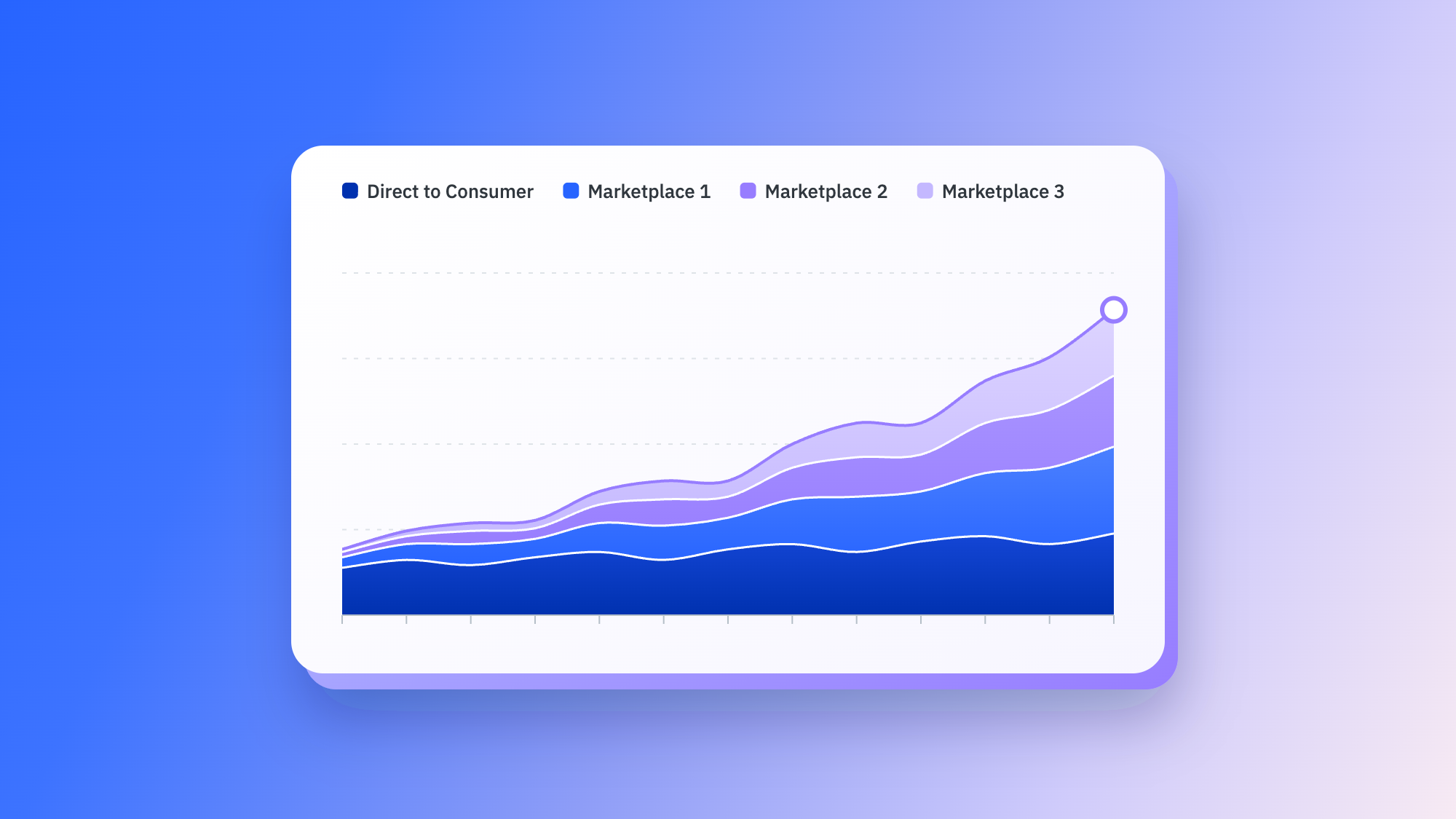

Starting an eCommerce business wasn’t easy, but once you found your niche, demand really started to take off. The next step was expanding from a direct-to-consumer site to selling on marketplaces.
But how do you handle the added demands of marketplace operations without sacrificing growth?
Marketplace expansion can put products in front of new customers and help you grow revenue, but each new channel also increases the number of orders, customer questions and performance data that same team needs to manage.
The answer isn’t to slow down. It’s to adopt an operating model that scales with your marketplace footprint. Clear ownership, simpler workflows and automation can help teams add channels without stretching resources too thin.
That means growth doesn’t have to come at the expense of control. When the operating model scales with your marketplace footprint, your brand can keep expanding without equally increasing your manual workload.
When marketplace operations start to break under growth
With one or two marketplaces, a small team can often manage through spreadsheets, portals and email. The process feels manageable because the team has fewer decisions, handoffs and exceptions to track.
Then another marketplace launches. Then two more.
Suddenly, the team is jumping between more systems to manage orders, returns and customer questions. Performance data is spread across marketplaces, and informal ownership rules become harder to maintain.
You may be losing control of your marketplace operations when:
- Teams spend more time switching between systems than improving the operation
- More people get involved, but ownership becomes less clear
- Teams discover problems only after logging into individual marketplace portals
- Teams piece together reports manually across marketplaces
- Routine work crowds out performance analysis and growth planning
The challenge goes beyond processing more orders. Each marketplace brings its own workflows, customer expectations and systems (opens in a new tab). As brands add channels, that complexity compounds.
Hiring can absorb some of the work. But adding people without simplifying the operation only scales the complexity.
What should scale when your marketplace footprint grows?
What if adding another marketplace didn’t require adding another layer of manual work?
The goal is not more oversight. It’s an operating model built around three priorities: automating repetitive work, managing marketplaces from one place and keeping ownership clear across teams.
Automating the work that doesn’t need judgment
More control doesn’t require more manual oversight. As marketplace volume grows, assigning every routine task to a person slows the team down and pulls time away from work that requires judgment, such as improving the customer experience and planning for growth.
Automation reduces repetitive work by keeping inventory and pricing up to date across marketplaces and routing orders into one system. When inventory changes, for example, automation can update every marketplace instead of asking someone to log into each portal.
Fewer manual steps also mean fewer routine tasks to monitor. Instead of checking whether updates happened on every marketplace, teams can focus on work that needs human judgment.
Giving teams one place to run marketplace operations
Automation removes repetitive work, but teams still need one clear view of the operation. Managing marketplaces as separate channels makes it harder to spot patterns, prioritize issues and act quickly.
Mirakl Connect (opens in a new tab) brings orders, returns, customer messages and marketplace performance into one platform. That gives teams a single hub for managing operations across marketplaces, so they don’t have to jump between systems.
That centralized approach helps brands such as Belle & Bloom (opens in a new tab), which uses Mirakl Connect to manage its catalog and inventory across multiple marketplaces through one connection.
That setup makes the next marketplace easier to add. Teams can bring a new channel into existing workflows without needing to access yet another portal for orders, returns and customer issues.
As a brand’s marketplace footprint grows, a broader view of performance becomes more useful. Teams can compare channels, see where sales are growing and identify which products perform best. They can use those insights to decide what to list next and where to adjust their marketplace strategy.
Make the next marketplace easier to operate
Marketplace expansion will always bring more orders, customers and decisions. It shouldn’t bring the same increase in manual work.
Scalable marketplace operations change what happens when the next opportunity appears. Instead of asking whether the team can handle another marketplace, brands can build the systems and workflows to add new channels while staying in control.