
The Mirakl Summit 2026 World Tour made its second stop in Munich, bringing eCommerce leaders to explore the new rules governing digital commerce.
Pioneers from BCG (opens in a new tab), Jumia (opens in a new tab), Coca-Cola Hellenic (opens in a new tab), home24 (opens in a new tab), Kaufland (opens in a new tab), Bunzl (opens in a new tab), Limango (opens in a new tab), Decathlon (opens in a new tab), Redcare Pharmacy (opens in a new tab), Douglas (opens in a new tab) and many more took the stage to share how their marketplace strategies are driving resilient growth and technical innovation in the agentic commerce era.
Throughout the day, three defining priorities consistently emerged: structuring product data for a world where AI agents are already making purchase decisions, building retail media into a primary revenue engine rather than a side experiment and making platform decisions with the conviction that foundations compound over time.
Here are the key strategic insights and real-world playbooks shared at the Mirakl Summit Munich.
Agentic commerce and GEO: the new rules of product discovery
Winning discovery no longer means just ranking in search results or bidding on keywords. The playbook is changing as shoppers increasingly use AI agents to find products.
BCG puts LLM adoption among US consumers at 80% (roughly 50% in Europe) and projects LLM traffic will overtake organic search within three to four years.
As Kai Hudetz (opens in a new tab), Managing Director at IFH Köln (opens in a new tab), put it: "It's not about finding products. It's about being selected."
AI agents bypass category pages and visual merchandising. Instead, they execute a five-step decision process: interpreting user intent, building a candidate pool from the web, filtering for relevance, ranking by proximity to the user's need and selecting based on brand trust.
This forces eCommerce businesses to design for two distinct customer journeys. Daniel Gospodinov (opens in a new tab), Partner at BCG, frames the strategic implication: "You now have two different customers: the agent and the human. You need to optimize for two completely different experiences."
- For the human customer: Focus on loyalty, personalization and inspirational discovery.
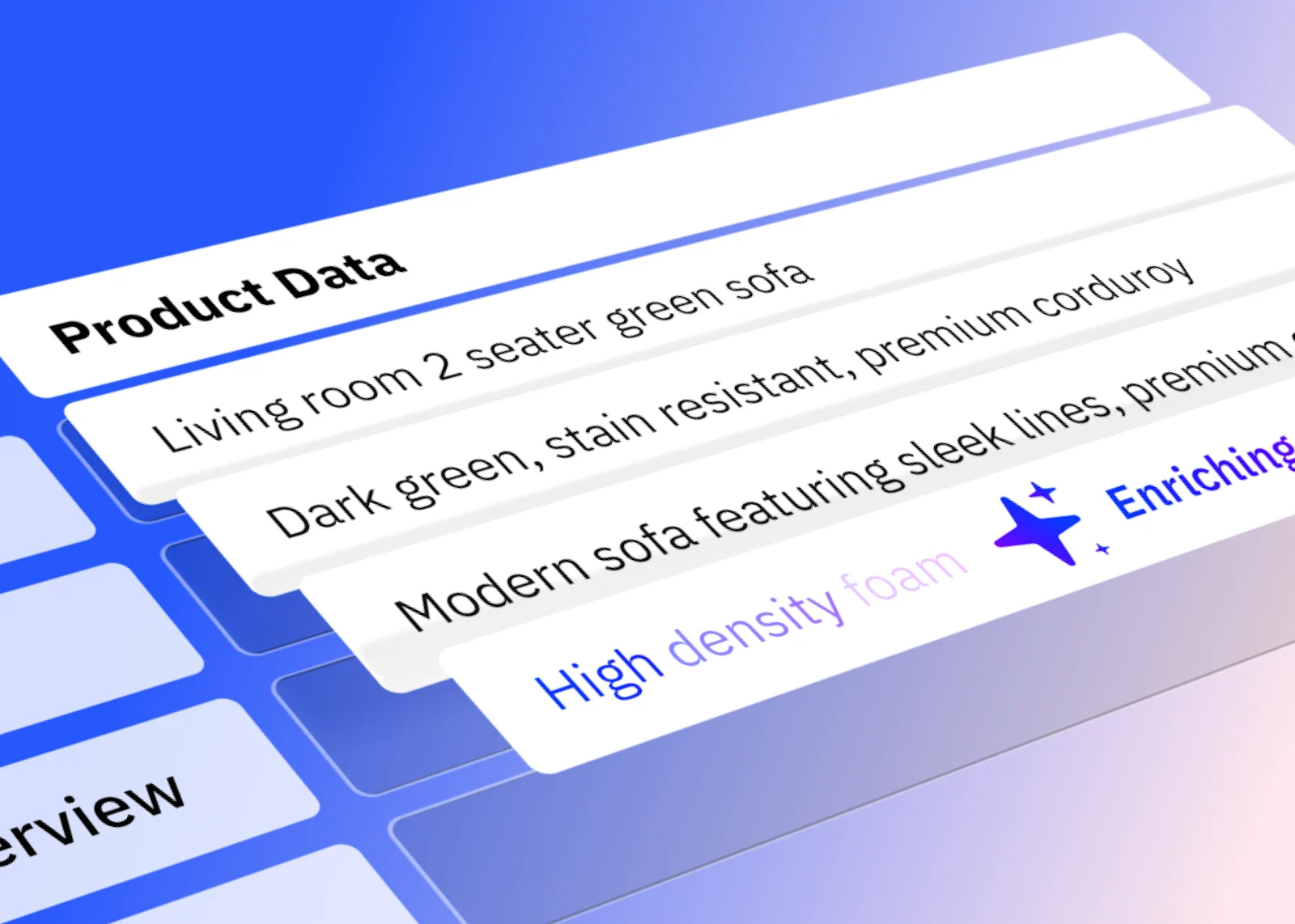
- For the AI agent: Focus on attribute completeness, semantic richness, structured metadata and brand authority signals with generative engine optimization (GEO). Thin catalog data makes products invisible to agents.
The marketplace model provides a structural advantage here. As J.J. Van Oosten (opens in a new tab), Board Advisor and CEO at Digital Transformation X (opens in a new tab), noted, platforms losing share of voice are often losing it on data readiness rather than price. Third-party sellers frequently carry richer and more diverse product data than first-party operations can manually maintain.
To prepare, Anne-Claire Baschet (opens in a new tab), Chief Data & AI Officer at Mirakl, outlines a three-step path:
- Commercial fundamentals: Broaden assortment, keep prices competitive and eliminate out-of-stocks. This alone improved LLM mention rates by 24 points for some US Mirakl customers.
- Structure & enrich product data: Make data machine-readable. Mirakl's Catalog Transformer delivers 39% more completed attributes than manual processing, testing semantic enrichments against real LLM prompts.
- Build agentic capabilities: Deploy shopping agents only after the data foundation is solid. "If you rush to build a shopping agent without the right data foundation, that's a problem," said Anne-Claire Baschet. "But if you've done steps one and two well, you'll have a flywheel."
This shift applies to B2B too. Markus Wolf, (opens in a new tab) Global Product Owner of the CIAVIS Platform at Coca-Cola Hellenic, noted that AI agents build supplier trust faster than traditional channels by delivering instant, accurate and reliable data.
Regardless of the industry, structured metadata is the starting point. As Daniel Gospodinov, Partner at BCG, put it: "For your human customer and for your agentic customer alike, that is a non-regret action and almost a table stake."
Retail media is not a pilot anymore
Retail media has transitioned from a growth experiment to an operational must-have. For marketplaces like Limango, with 14 years of retail media experience, it has become a core aspect of the business.
This scale is reflected in the technology: 95% of Mirakl Ads campaigns now leverage automation, making AI-driven self-service the industry standard.
Jumia's experience also proves what mature retail media can deliver. After migrating its ad infrastructure to Mirakl Ads across eight countries, Jumia saw:
- Return on Ad Spend (ROAS) nearly doubled, jumping from 5 — 6 to 9 — 10.
- Sponsored product revenue grew 160% year over year in the most recent quarter.
- Seller retention hit 70% to 75% after their first campaign, shifting Jumia from a "push" model to an organic, seller-led "pull" model.
"It was a double change: a technological change and a cultural change," said Romain Carre-Pistollet (opens in a new tab), Marketplace & Retail Media Director at Jumia. "Top management now follows retail media on a weekly basis."
Two key takeaways from their retail media journeys:
- Education outweighs budget: The primary barrier to campaign performance is often mismatched seller expectations regarding ROAS and attribution. The most successful platforms invest heavily in structured seller onboarding.
- Think full-funnel: Retail media is no longer just a lower-funnel tool. As AI agents handle more upper-funnel discovery, brand visibility and awareness-level investments are becoming vital to feed initial agentic product pools.
Getting the foundations right
Early architectural decisions — or delays — dictate how fast an enterprise can scale later. This compounding effect runs through model selection, operational speed and compliance.
1. Match the model to the strategy
The platform model choice must be driven by — and fully aligned with —the company’s underlying commercial strategy. Three leaders highlighted why they chose different platform architectures based on their unique commercial realities:
- Dropship: At Lusini (opens in a new tab), the dropship model was adopted to serve hospitality B2B clients through a single billing partner, while accounting for a supplier base that is not yet digitally ready for direct marketplace fulfillment.
- OneCreditor: At Fressnapf (opens in a new tab), the OneCreditor was chosen to protect long-standing supplier relationships and franchise structures while maintaining end-to-end control over the customer experience.
- Marketplace: At Grube (opens in a new tab), the marketplace model was selected to bypass physical inventory constraints in a highly regulated category and become the ultimate specialty destination in his niche.
The choice between marketplace, dropship and OneCreditor is not a technical one. It is a strategic one.
2. Prioritize speed and scalability
Speed of execution remains a major competitive advantage. Bunzl One (opens in a new tab) — which consolidates not-for-resale purchasing for Jumbo Supermarkets (opens in a new tab) across 700 stores and 6,000 suppliers — was launched during the summit itself.
Frank Daamen (opens in a new tab), Digital & Marketing Director at Bunzl Retail Industry (opens in a new tab), shared their core principle: "Start by the friction of the customer." Identify the operational pain point first and then build the technology to solve it.
Similarly, home24 launched its Netherlands marketplace in just 10 weeks by relying on a highly repeatable internationalization playbook. "Think about scalability and internationalization before the first expansion, not after," advised Vanessa Burmester (opens in a new tab), Marketplace Director at home24.
Meanwhile, Jumia successfully expanded to eight countries in six weeks, experiencing zero billing errors from day one. "Don't wait," said Romain Carre-Pistollet, Marketplace & Retail Media Director at Jumia. "Find the right partner that is able to adjust to the complexity of your business."
3. Build in compliance early
Tax and compliance are frequently underestimated scaling risks. Jordi Sol (opens in a new tab), Director of eCommerce Tax Research at Vertex (opens in a new tab), cautioned against temporary workarounds: "Manual processes don't save any money. They just defer the cost."
For international expansion, features like real-time VAT calculation and deemed-seller compliance must be integrated from day one rather than added after an audit.
What’s next?
The insights from the Mirakl Summit Munich 2026 make one thing clear: the future of digital commerce belongs to data-ready platforms.
As AI agents rewrite the rules of product discovery and retail media becomes an essential revenue driver, traditional eCommerce playbooks are no longer enough.
Succeeding in this new era requires dual optimization — designing seamless experiences for human buyers while delivering the rich, structured metadata required by AI.
Backed by the right platform model and a commitment to speed and compliance, this data-first approach unlocks a powerful growth flywheel.