
In September 2024, the website of Australia’s largest department store retailer Myer (opens in a new tab) was receiving virtually no traffic from Large Language Models (LLMs). By April 2025, LLM-driven visits were appearing on a weekly basis. Fast-forward to April 2026, that number has grown at a parabolic rate with no signs of slowing.
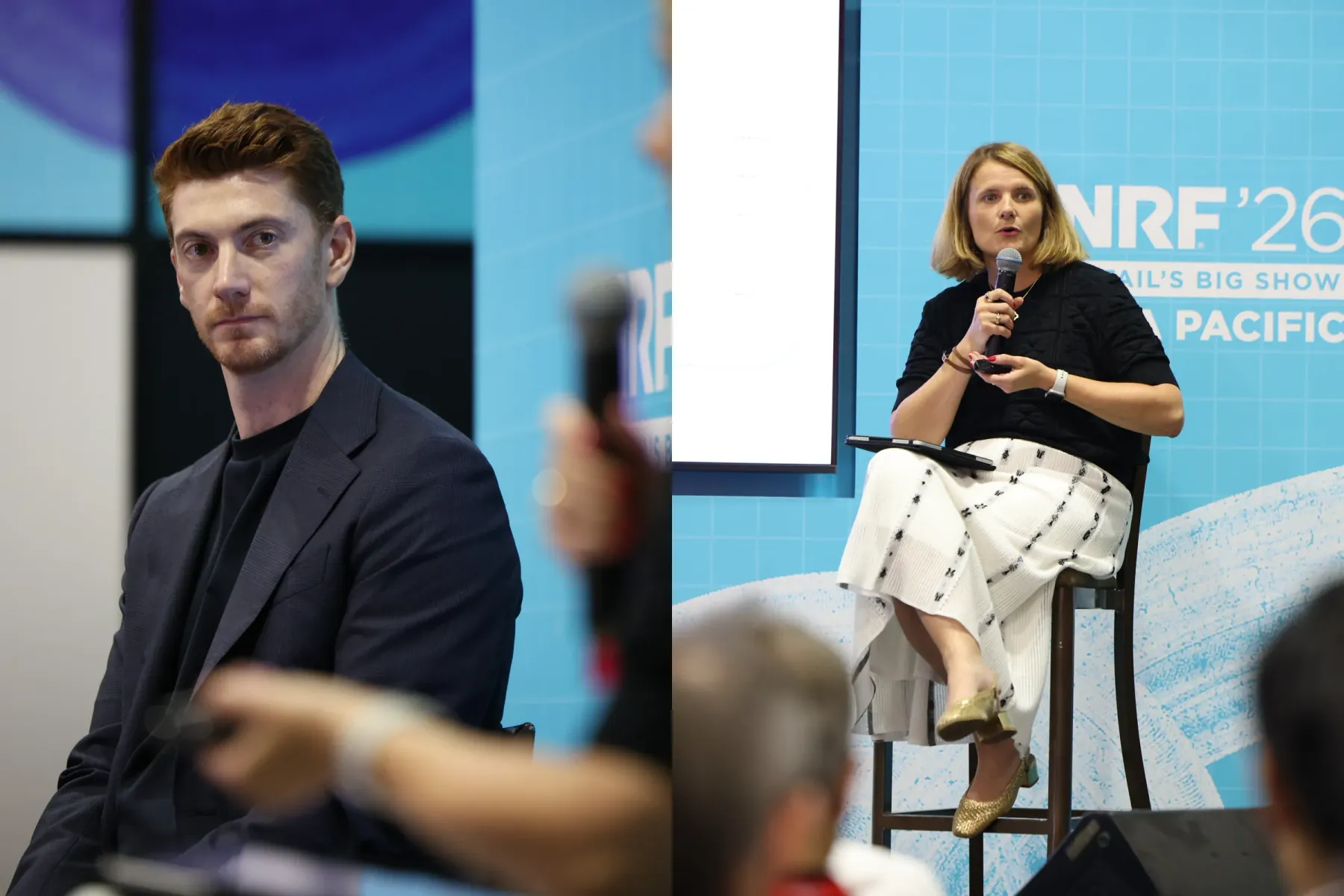
That trajectory, shared at NRF APAC 2026 (opens in a new tab) by Warwick Blunt (opens in a new tab), GM of Digital Commerce at Myer (opens in a new tab), on stage with Anne-Claire Baschet (opens in a new tab), Mirakl's Chief Data and AI Officer, is not a projection. It’s real data from a retailer that underlines a trend that is already well underway, and not a challenge to be dealt with in the future: Agentic commerce has changed the way consumers discover, evaluate and buy.
From keyword-based shopping to intent-based discovery in agentic commerce
Agentic Commerce is the third wave of retail transformation. After the digital revolution two decades ago and the platform revolution 15 years ago, we are now entering what Anne-Claire calls the “shopper revolution.”
This revolution moves eCommerce away from the keyword-based shopping experience of previous decades and brings it closer to the customer experience a shopper might expect from their local brick and mortar.
When a shopper walks into a brick and mortar, they might tell an associate they’re looking for running shoes, but they’re equally as likely to express the context, needs and goals of their shopping journey, in order to get a more tailored, personal experience.
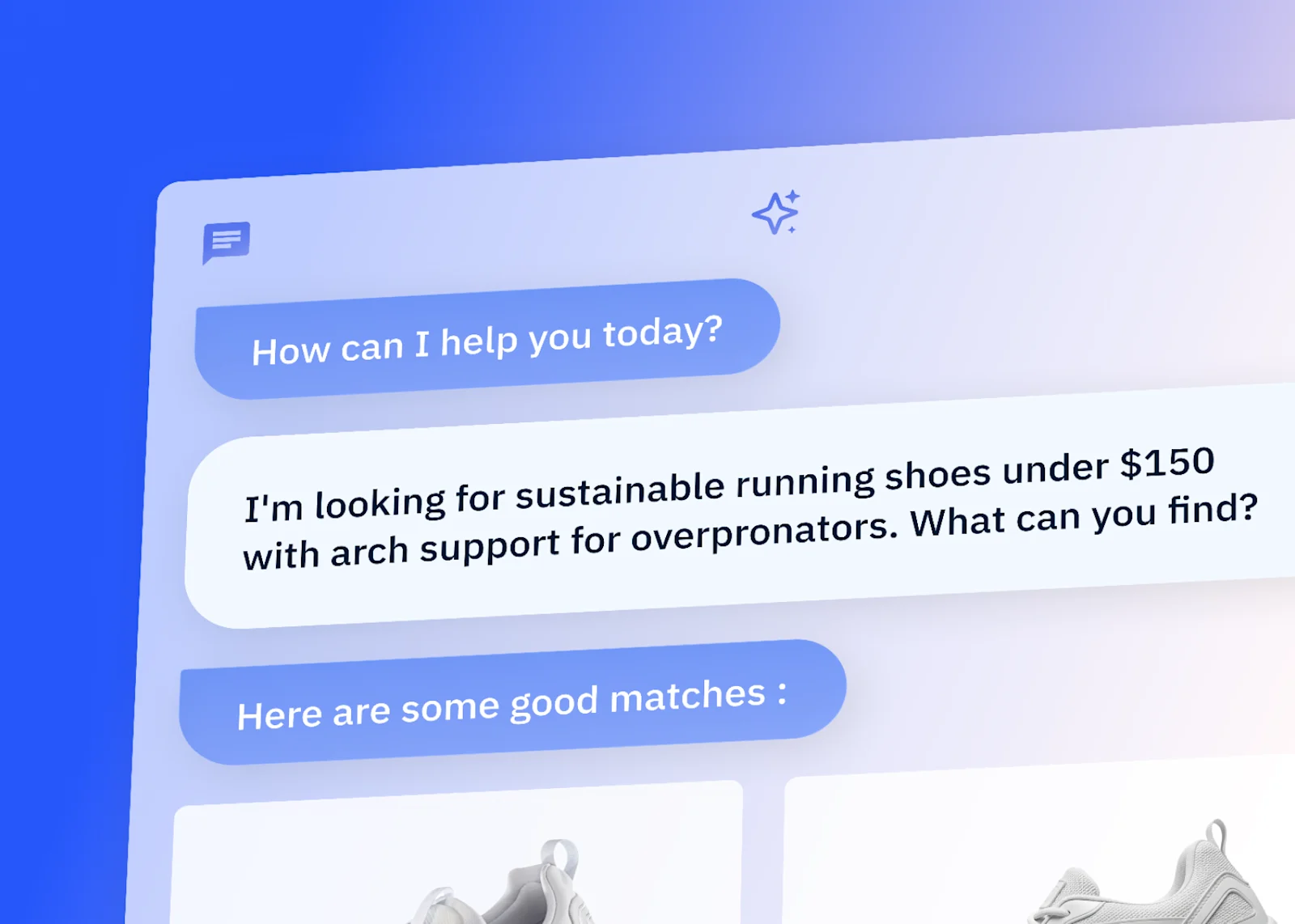
LLMs and AI shopping agents work the same way, allowing shoppers to go from the traditional keyword search of “running shoes”, in intent-based prompts like “I’m training for the Paris marathon this October and need the right gear for a cold, wet route near the Seine river.
That shift to intent-based prompting fundamentally changes how retailers need to think about search and online visibility.
As Meyer shows us, this isn’t a future trend, but one that’s already established and quickly accelerating. In fact, AI-driven traffic is on track to surpass organic search by 2028, while AI product recommendations are now more trusted than recommendations from friends.
What Myer’s data tells us about agentic commerce today
The commercial signal is already clear.
"It's traffic, it's revenue," Warwick told the NRF APAC audience. Conversion rates from LLM-referred traffic at Myer are significantly higher than those from paid search, paid social or organic traffic, and continue to increase month over month.
This aligns with publicly available data Anne-Claire referenced, including a 38% higher conversion rate from AI-affiliated traffic during last year's Black Friday in the U.S., and a Shopify study showing nearly 50% additional conversion (opens in a new tab) for this traffic segment alongside an increase in average order value. When an AI agent sends someone to a retailer's site, those shoppers arrive ready to buy.
Two vulnerabilities retailers need to address in agentic commerce
Warwick was direct about where traditional retail is exposed in the age of agentic commerce.
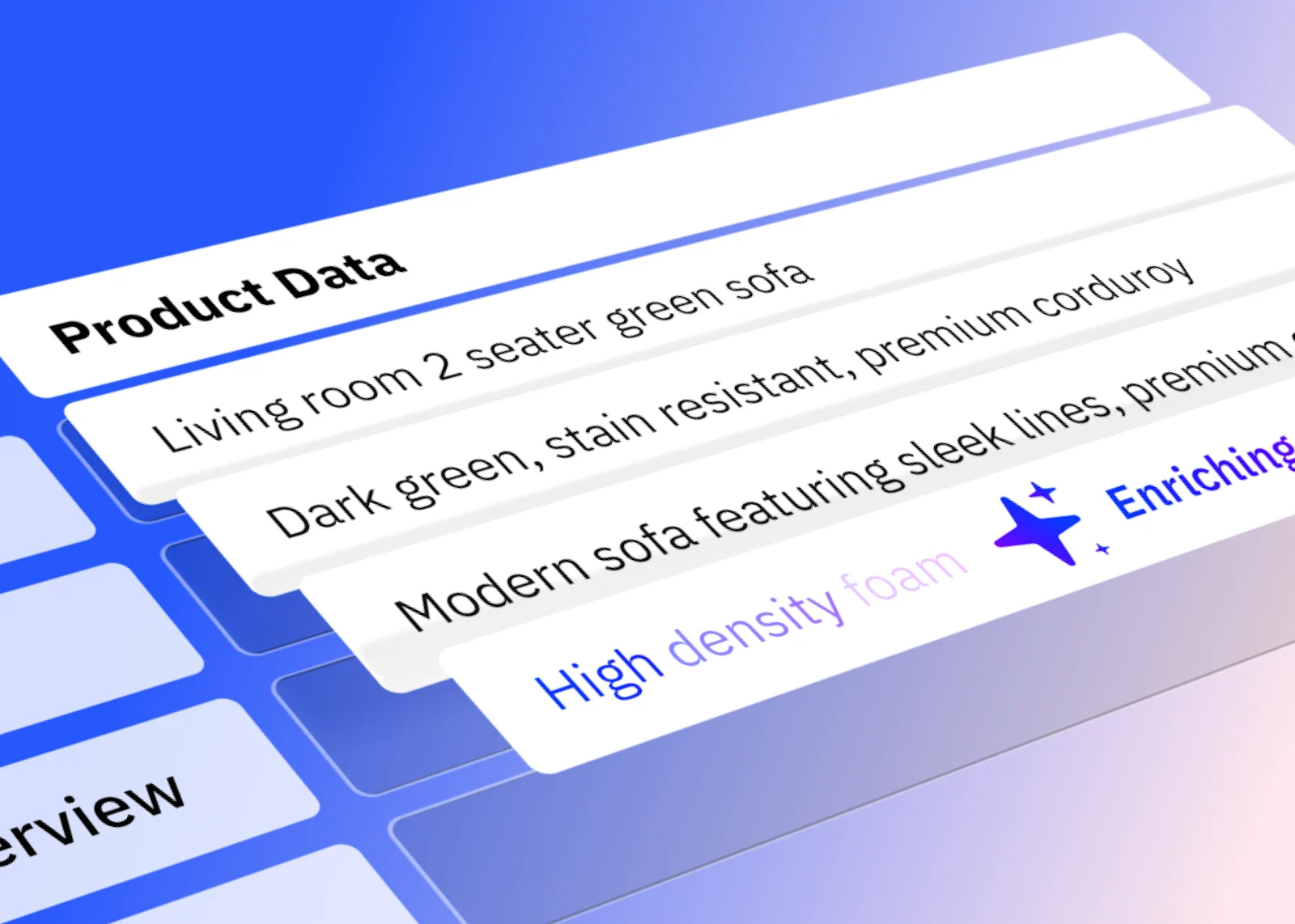
The first is catalog data enrichment. AI agents don't peruse produce pages in the same way humans do. Instead, they parse structured data.
A cocktail dress for a formal event is difficult for an AI shopping agent to differentiate from a casual dress you might wear to a family lunch if those differences aren’t clearly articulated in the structured data the agent is parsing. Similarly, if a shopper is prompting an LLM for a polka dot dress, the catalog data needs to reflect this detail for it to appear in a chat citation.
“If there is no product detail attribution for white spots on a blue dress,” Warwick explained, “the agent could surface the wrong product entirely.”
For Myer, which manages hundreds of thousands of SKUs, solving this requires a programmatic approach at scale.
The second vulnerability retailers face in agentic commerce comes from assortment breadth and depth. AI agents can only recommend what they can find.
A Mirakl study with a U.S. retailer showed that marketplace expansion drove a 93% mention rate in their category within ChatGPT's top five results, with a first-place ranking 70% of the time. Removing the marketplace strategy modeled a 24% reduction in mention rate. Expanded, well-curated assortment is the foundation of agentic visibility.
Why most eCommerce sites aren't ready for LLMs
Mirakl's analysis of product page GEO readiness found the average site scored 48 out of 100 for LLM-readiness. Less than 1% scored above 80. According to the analysis, the most common GEO readiness gaps were missing metadata, absent user-generated content and a lack of the intent-based attributes agents need to match products to real shopper needs.
To close this gap, Mirakl has introduced Agentic Activation, the first enterprise infrastructure that makes products discoverable, recommendable and purchasable by AI agents at scale. It delivers two live capabilities: Agentic Product Enrichment, which automatically rewrites and enriches product content so AI platforms can read, compare and recommend it accurately, and Agentic Channels, which connects merchants directly to LLM platforms and manages the full transaction end-to-end, from inventory and pricing to fulfillment and after-sales.
Readying for agentic commerce: 3 things retailers should do now
Anne-Claire and Warwick closed their conversation at NRF APAC with three action items retailers need to prioritize to start competing in the era of agentic commerce:
- Act now: Consumers are already using LLMs to discover and evaluate products. The window for early-mover advantage is open, but closing fast.
- Expand assortment: Marketplaces and dropship programs allow retailers to strategically expand assortment, increasing visibility inside LLMs and AI shopping agents.
- Optimize your catalog data for LLMs and AI shopping agents: Generative engine optimization (GEO), especially when layered on top of Search Engine Optimization (SEO) is table stakes for competing in the agentic commerce era.
Readying yourself and your business for the agentic commerce era can feel overwhelming, but with the right tools you can take advantage of the opportunity in front of you. To get started, assess your product pages with Mirakl’s GEO readiness analyzer (opens in a new tab), or contact our team to begin your Agentic Activation journey.