
2020 has introduced an entirely new set of challenges for retailers, accelerating the imperative of digital transformation while introducing new needs for customers. This year alone, up to 50% of buyers have shopped items they’ve never bought online before.
In a world that has redefined normality, what can we expect for this holiday season?
And more importantly: why do you need a marketplace to reap the benefits of Black Friday?
The platform economy now defines and dominates online retail sales dates throughout the holiday period - Prime Day, Singles’ Day, Cyber Monday and Black Friday. These dates guide many of the B2C marketplaces that make up the platform ecosystem around the world.
Both marketplace operators and sellers can use the momentum of these milestones to reap rewards.
The results speak for themselves: Amazon's third-party sellers surpassed $3.5 billion in sales on Prime Day 2020 - a nearly 60% year-over-year increase.
And, in 2019, we processed a remarkable 1 million orders from consumers taking advantage of Black Friday deals on Mirakl-powered Marketplaces across the globe! All the while in 2019, Mirakl marketplaces across the EMEA region more than doubled GMV in the week of Black Friday.
**At Mirakl, we are expecting to see at least a 20% uplift for Black Friday this year vs 2019.
** Knowing that online spending is expected to increase by 59% in 2020 (vs 2019), it’s more than reasonable to predict that marketplaces are going to play a key role in this holiday season.
Let’s take a look at how the marketplace model can help you race ahead during this year's winter sales.
Increasing Your Product Catalogue to Meet Your Customers’ New Needs
Many consumers have turned to online shopping for the first time as stores close.
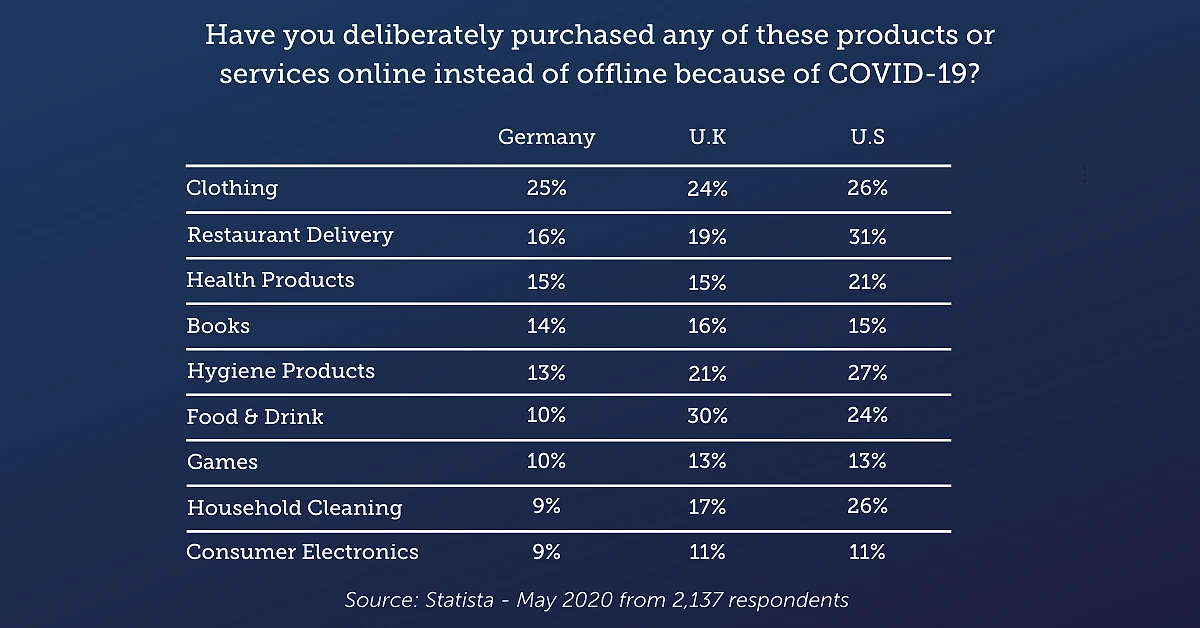
For this customer base - newly converted to digital commerce - the wide range of products they are looking for means it is inevitable they turn to marketplaces, the only model capable of providing them with what they need, at any time.
From the retailer perspective, the diversification of suppliers helps them mitigate the out-of-stock risk they are facing because of the Covid-19 pandemic and avoid the saturation of their logistic infrastructure. During the lockdown in Italy, for example, over 20% of the orders couldn’t be delivered for this reason. By being able to quickly onboard new suppliers at scale thanks to their marketplace, they can quickly adapt to the sudden demand changes while keeping a low level of risk thanks to the marketplace cost delegation model.
“Inventory is absolutely critical and moving to a marketplace model not only allows us to manage stock in a more creative way, it also allows us to access stock that we previously could not get access to.” - Dan Ashcroft, Director of Partner Services at Secret Sales
Amazon Marketplace is the perfect example - its unmatched product assortment (fueled by its third-party sellers) attracts an ever-growing number of customers.
And this isn’t going to change this holiday season: according to Bazaarvoice, 74% of UK customers are planning to purchase from the Amazon Marketplace. (opens in a new tab) The good news is that you don’t need Amazon to develop your own marketplace strategy...
Increasing Your Assortment to Boost Your SEO
Onboarding new suppliers allows you to cover all your customer needs while mitigating your out-of-stock risks, which will be critical this quarter.
But this also helps you feed a long-term customer acquisition strategy: SEO.
In the world of eCommerce, a lot of customer stories start on Google. In a recent study, 51% of shoppers said they use Google to research a purchase they plan to make online (opens in a new tab).
Leaving Google out of your main persona buying lifecycle is definitely not a good idea.
A marketplace strategy can help feed your SEO needs.
Among our 300+ customer projects, we’ve seen many examples of marketplaces that have increased their traffic & sales thanks to their increased assortment.
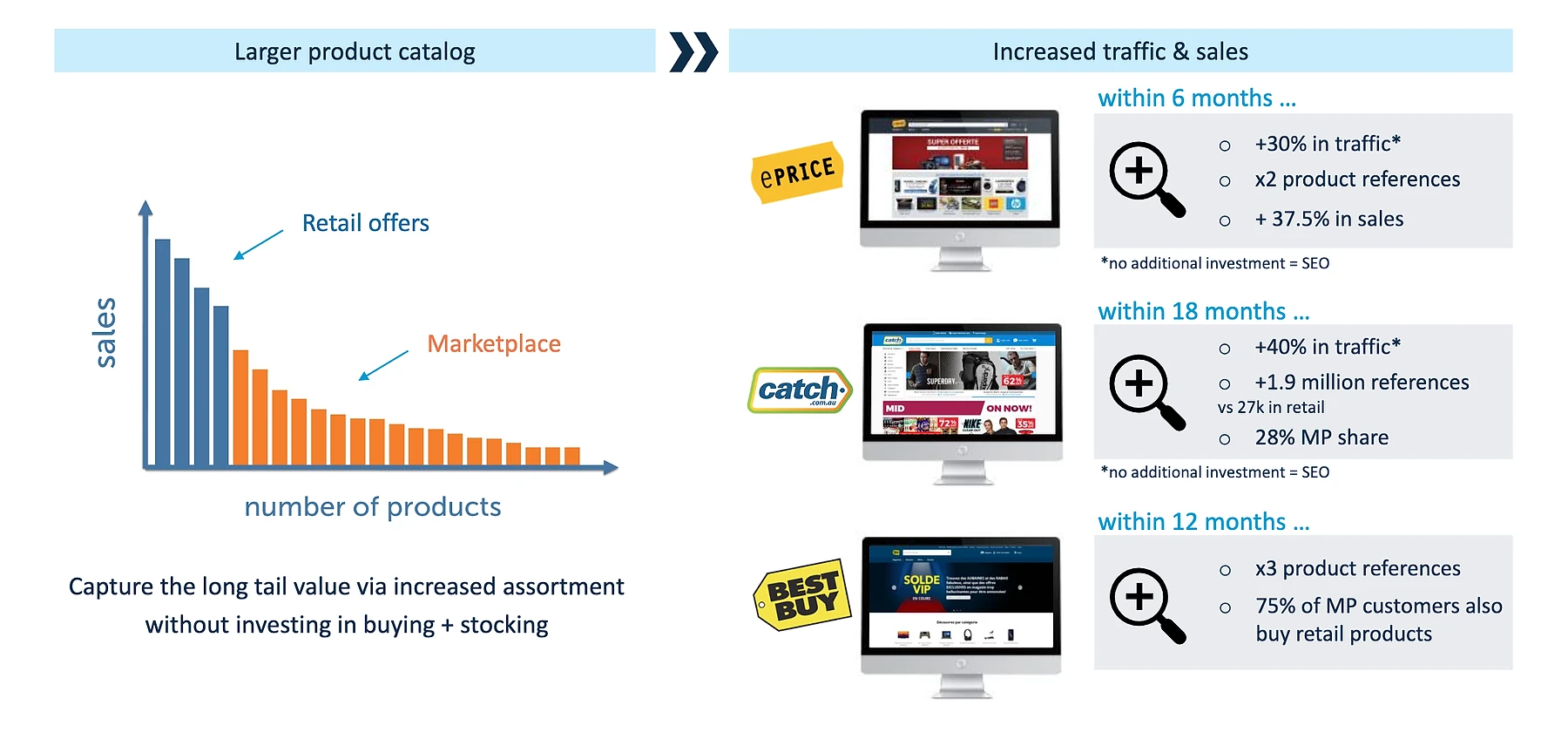
The larger product catalog you have, the better SEO ranking your products get.
Let Third-Party Sellers Compete on Your Marketplace
Before Covid-19, many surveys pointed to how customers were more brand loyal year on year (opens in a new tab).
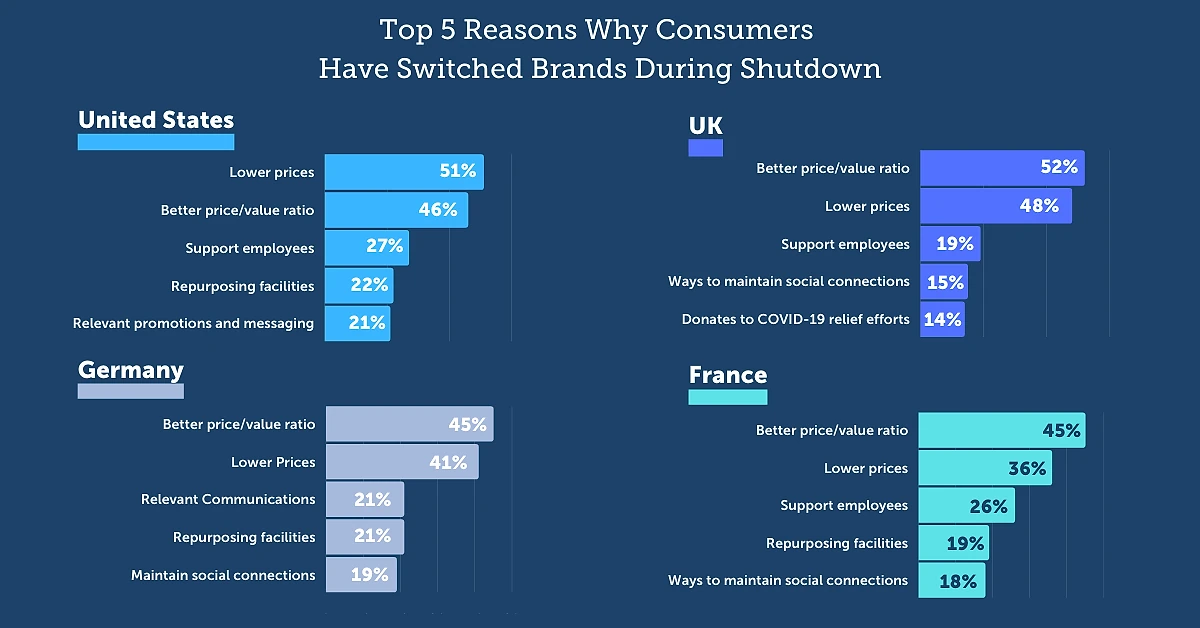
But that was before the pandemic. Since then, many customers have switched brands and stores based on their new needs and demands, as a result of their changing lifestyles and spending capacities in terms of price and value.
The graph below from McKinsey is a confirmation that retailers have to remain as competitive as possible in order to capture buyers’ value.
Source: McKinsey (opens in a new tab)
As a retailer, offering the most competitive price is a day-to-day challenge but in the holiday season this is the cornerstone of any viable marketing strategy.
During these periods, marketplaces offer a unique advantage: they cover the whole buying life cycle - from inspiration to consideration, to purchase. This is where third-party sellers can compete with their offering pricings.
All under the same marketplace umbrella.
“Consumers flit from websites to websites when shopping, so if they can compete on your website, that makes their life easier and keeps the sale with that retailer." Régis Schultz, Darty’s Chief Executive Officer (former)
Capturing the buyers’ visit through multiple price offerings will be key in this year Black Friday.
Covid-19 has definitely changed the face of eCommerce. It has considerably accelerated digital transformation projects among numerous industries. This holiday season is a stress test of the landscape in the coming years and the role that marketplaces are going to play.
“The success of marketplaces can be put down to accessibility, curation, community and efficiency. Consumers are using marketplaces as a way to search and locate what they need instantly and conveniently.” - Anthony Capano, Managing Director, International at Rakuten Advertising.
The marketplace model has already proved its resilience and flexibility in these uncertain times. With the current data we have, it’s reasonable to believe that this holiday season will go only further to showcase the dependence of eCommerce on marketplaces to be truly successful.