
The way that consumers are buying has changed dramatically over the past 10 years. Even B2B buyers have come to expect the flexibility, ease of use, and price transparency that online marketplace platforms offer.
Marketplaces are becoming ubiquitous – but do you know everything there is to know about the marketplace model? Test your know-how with our marketplace data roundup. Whether you’re an expert, a novice, or somewhere in between, we’re willing to bet you’ll learn something!
1. Sales on marketplace sites accounted for 52% of global web sales in 2018.
That’s right – it’s no surprise that marketplaces like Alibaba, Amazon, and eBay are big, but did you know they made up more than half of web sales worldwide last year? A whopping $1.86 trillion (opens in a new tab) was spent globally on the top 100 online marketplaces in 2018.
2. 66 of the top 100 online marketplaces were launched in 2010 or later.
Marketplaces are taking off! Many of those 66 new marketplaces are from well-established retailers that decided to launch marketplaces so that other merchants could sell on their sites.
3. Gartner projects that more than 60% of online sellers will adopt marketplaces or include third-party sales in their eCommerce ecosystems by 2020.
Other leading organizations are seeing the writing on the wall, and they’re planning accordingly. On top of that, 15% of medium- to high-GMV digital commerce companies (opens in a new tab) will have deployed their own online storefronts by 2023.
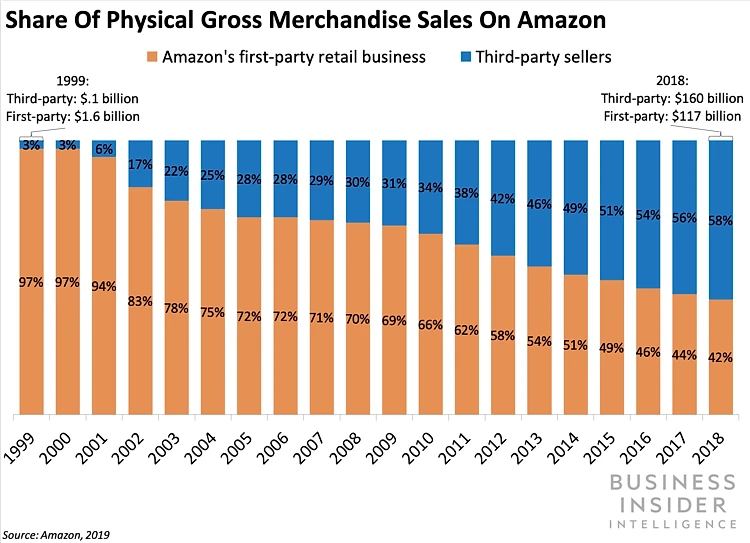
4. On Amazon, third-party sellers make up a bigger share of sales on Amazon's marketplace than Amazon itself.
You read that right: on the biggest marketplace in the U.S. (and the third-largest in the world), third-party sellers racked up $160 billion (opens in a new tab) to Amazon's first-party retail business' $117 billion in 2018. They also made up more than half (58%) (opens in a new tab) of the units sold on Amazon.
5. Platform business models aren’t just for B2C organizations – B2B online commerce is taking off, too.
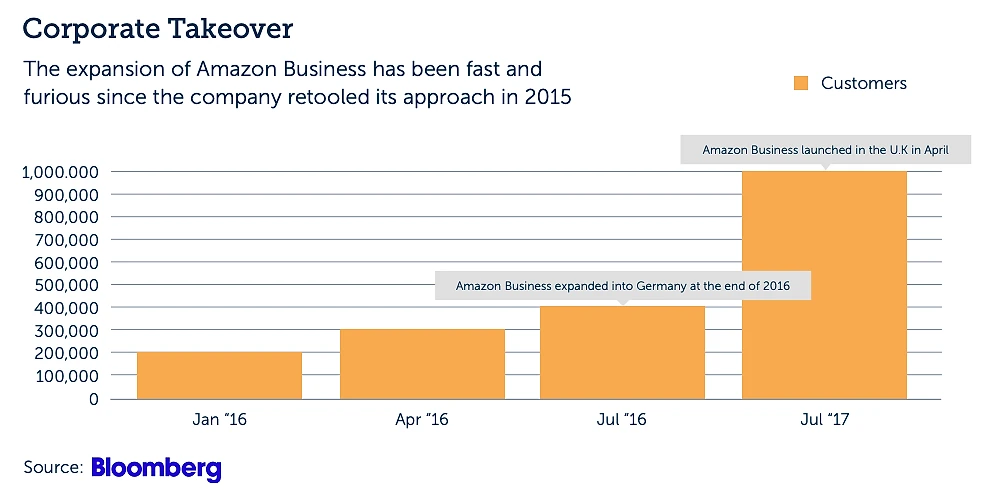
Forrester predicts that B2B online commerce will be a $9 trillion industry in the U.S. by 2019. Amazon’s B2B offering alone, Amazon Business, reached 1 million customers in 2017 and surpassed $10 billion in sales (opens in a new tab) in 2018.
6. Today, 87% of business buyers are making business purchases on online marketplaces.
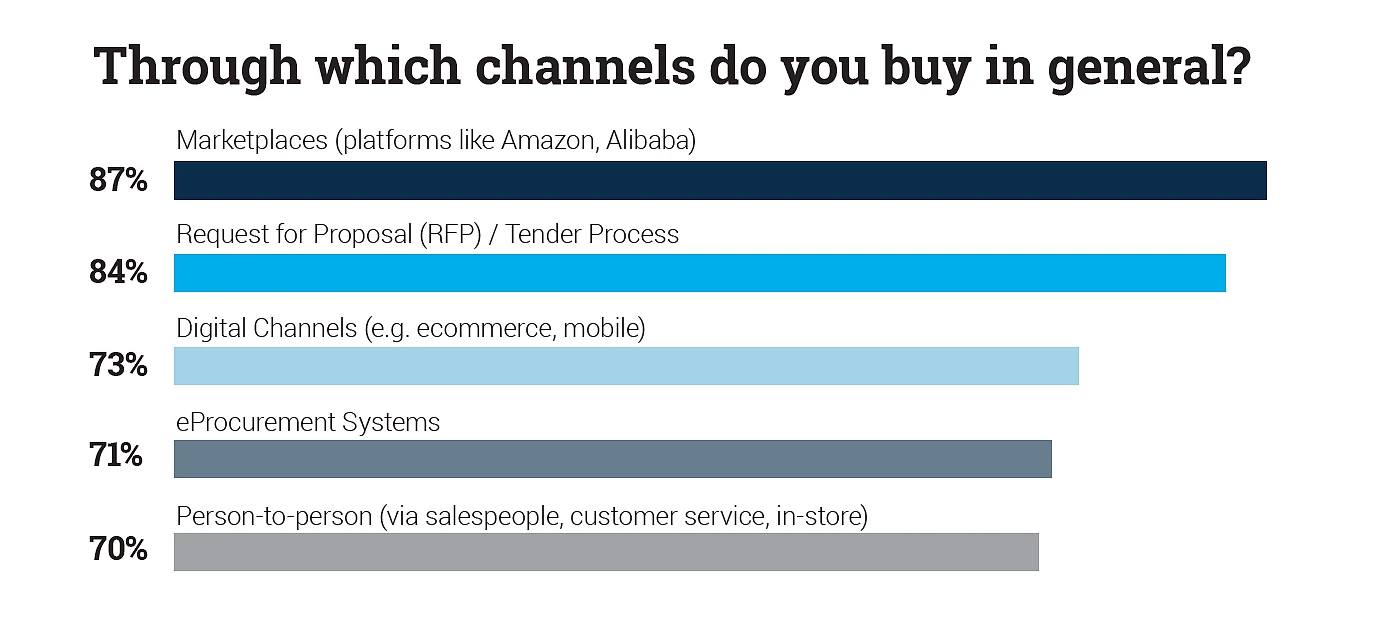
That’s across all age ranges (opens in a new tab) – Baby Boomers, Gen X, and Millennials alike. And while 73% of respondents purchase in other digital channels (eComm + Mobile), only 11% of respondents actually prefer those channels.
7. Two-thirds of B2B executives are already planning for marketplaces.
A recent survey of B2B executives and digital practitioners (opens in a new tab) found that 66% of companies are planning to build a larger ecosystem of third-party partners and products. Why? They want to offer more for their customers and improve the customer experience.
8. Marketplaces represent diverse opportunities for manufacturers, too.
50% of manufacturers plan to launch their own marketplaces and invite their channel partners to be sellers. 43% of manufacturers are planning to participate in other marketplaces to sell to customers.
9. Buying a marketplace solution – rather than building your own – gets you to higher revenue faster.
A Total Economic Impact study by Forrester (opens in a new tab) found that Mirakl Marketplaces can deliver a significant 162% return on investment within three years and drive revenue up by $412 million over three years.
10. Companies that use Mirakl experience an increased lifetime value of customers worth $5.5 million.
They also experience an average 15% increase in average order size and a 7% increase in physical store sales. Plus, the increased selection of products combined with a superior shopping experience attracts more repeat customers with greater frequency.